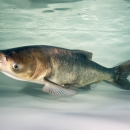
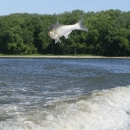
Invasive species are non-native plants, animals and other living organisms that thrive in areas where they don’t naturally live and cause (or are likely to cause) economic or environmental harm, or harm to human, animal or plant health. Invasive species degrade, change or displace native habitats, compete with native wildlife, and are major threats to biodiversity. The Great Lakes Aquatic Invasive Species Early Detection and Monitoring program monitors for invasive fish species that are at high risk of invading the Great Lakes. In the future, the program hopes to expand to benthic macroinvertebrates.
Currently, we focus on high-risk species identified by:
- United States Fish and Wildlife Service (USFWS) risk assessments
- United States Geological Survey (USGS) Nonindigenous Aquatic Species database,
- Great Lakes Commission watchlists
Input from state and tribal partners helps us decide which invasive species invasive species
An invasive species is any plant or animal that has spread or been introduced into a new area where they are, or could, cause harm to the environment, economy, or human, animal, or plant health. Their unwelcome presence can destroy ecosystems and cost millions of dollars.
Learn more about invasive species to prioritize.