5392711
Public Comment Opportunity: Draft Rights‑of‑Way Compatibility Determination

The U.S. Fish and Wildlife Service is seeking public review and comment on the Draft Programmatic Compatibility Determination for Rights‑of‑Way and Rights to Access for Temporary Disturbances and Minor Impacts on Conservation Easements in the Mountain‑Prairie Region. This draft document evaluates the compatibility of proposed activities that may cause temporary, minor disturbances while supporting necessary public infrastructure needs across conservation easements in the Mountain-Prairie Region. The draft Compatibility Determination will be available for a 30‑day public comment period from April 1 to May 1, 2026. Comments, questions, concerns, or a request for a hard copy can be sent to: MountainPrairieNWRS@fws.gov.

We are also seeking public review and comment on the Draft Compatibility Determination (CD) for Fishing at Bear River Migratory Bird Refuge. This draft document re-evaluates and replaces the 1994 CD for fishing. Fishing has occurred on the refuge since 1994. The draft Compatibility Determination will be available for a 14‑day public comment period from April 24 to May 8, 2026. Comments, questions, concerns, or a request for a hard copy can be sent to: MountainPrairieNWRS@fws.gov.

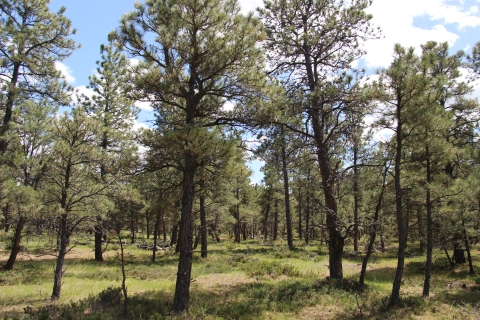
Welcome to War Horse National Wildlife Refuge, one of over 570 Refuges in the National Wildlife Refuge System. War Horse Refuge has the distinction of having three separate units encompassing a wide array of habitats ranging from a Ponderosa pine woodland and grassland savanna next to a reservoir (War Horse Unit) to mixed sagebrush-grassland next to a reservoir (Wild Horse and Yellow Water Units). Altogether, the habitats in these units boast a plethora of different wildlife species on the landscape. Come see for yourself!

Visit Us

War Horse National Wildlife Refuge (NWR) lies within the boundaries of the Charles M. Russell Wetland Management District in central Montana. Both are a part of the Charles M. Russell NWR Complex. War Horse Refuge consists of three separate tracts of land: War Horse Unit, Wild Horse Unit, and Yellow Water Unit. Each unit of the Refuge is open to hunting, wildlife observation, and photography.

Location and Contact Information

      About Us

      War Horse National Wildlife Refuge is one of four unstaffed satellite National Wildlife Refuges (NWRs) in central Montana that lie within the boundaries of the Charles M. Russell Wetland Management District (WMD). Both the Refuge and the WMD are part of the Charles M. Russell NWR Complex, headquartered in Lewistown, Montana.
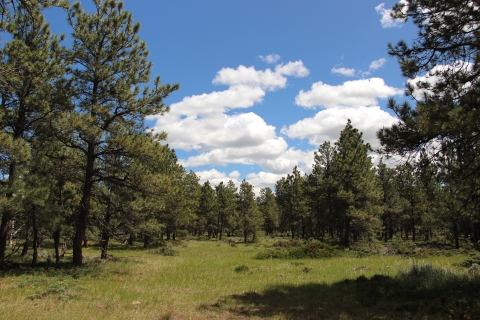
      The three units that comprise War Horse NWR - War Horse Unit, Wild Horse Unit, and Yellow Water Unit, combine to make this Refuge 2,876 acres. The Refuge was established in 1958 as a “refuge and breeding ground for migratory birds and other wildlife”. It serves as a staging and nesting area for migrating waterfowl, shorebirds and other migratory birds. Its grasslands, sagebrush sagebrush
      The western United States’ sagebrush country encompasses over 175 million acres of public and private lands. The sagebrush landscape provides many benefits to our rural economies and communities, and it serves as crucial habitat for a diversity of wildlife, including the iconic greater sage-grouse and over 350 other species.

      Learn more about sagebrush
      , savanna, and woodlands also provide habitat for a number of other species, such as pronghorn, mule deer, greater sage grouse, sharp-tailed grouse, neotropical migrant and grassland nesting birds, jackrabbits, and porcupines. 

      What We Do

      The overall management goal at this Refuge is to promote biological diversity and maintain the natural abundance of native plants and wildlife. Science is the foundation upon which conservation decisions are made. We use research, monitoring and the best-available science to inform our work to conserve fish, wildlife, plants, and their habitat.

      Our Library

      CMR WMD CCP, Appendices, EA, & FONSI

      The Charles M. Russell Wetland Management District and associated National Wildlife Refuges Comprehensive Conservation Plan (CCP), Appendices, Environmental Assessment (EA), and Finding of No Significant Impact (FONSI).