


Willapa
Long Beach, WA 98631
Plan Your Visit
National Wildlife Refuges offer us all a chance to unplug from the stresses of daily life and reconnect with our natural surroundings. Change is constant and necessary at Willapa National Wildlife Refuge, providing new experiences with each visit. Daily and seasonal tides, seasons, weather patterns, life cycles and migrating animals all contribute to the consistent flow of opportunities.
Activities
- Birding
- Wildlife watching
- Hiking
- Education programs
- Photography
- Boating - non-motorized
- Boating - motorized
- Camping
- Shell fishing
- Fishing
- Hunting
Rules and Policies
National Wildlife Refuges are places where wildlife comes first, and while people are welcome, activities are regulated and monitored to ensure that impacts are minimal to the plants and animals that call the refuge home.
Refuge Hours
Visitors are welcome to enjoy refuge trails every day from sunrise to sunset. The Headquarters Building is open from 7:30 am - 4:00 pm Monday through Friday depending on staff availability.
Dogs
Dogs are not allowed on the refuge except for dogs engaged in authorized hunting activities and certified service dogs.
Bicycles
Bicycles are allowed on Long Island and Greenhead Slough Trail. Bicycles are not allowed on any other refuge trails.
Take Only Memories (and photos!)
Please do not collect or move archeological or historic objects, or any natural material such as plants, mushrooms, berries, and antler sheds.
Camping
Camping is allowed in designated campsites on Long Island only.
Fires
Fires are prohibited, except in designated fire rings in Long Island campsites.
Hunting
Hunting of waterfowl, coot, snipe, deer, elk, bear and forest grouse is permitted on designated areas of the refuge.
Fishing
Fishing is permitted from the refuge-owned shoreline of Willapa Bay. Fishing is not permitted on refuge streams or interior sloughs.
Closures
Areas within refuge boundaries may be closed to public entry due to sensitive species or restoration. Between March 15 and September 15, a portion of Leadbetter Point is closed to protect nesting snowy plovers.
Drones
Launching and land of uncrewed aircraft/drones is prohibited on all national wildlife refuges.
Locations
Willapa National Wildlife Refuge
7112 67th Place Long Beach, WA 98631
Driving Directions Access to the headquarters building is only available by way of Sandridge Road to 67th Place.
- Tarlatt Slough and South Bay Trails: From Sandridge Road take 95th Place east.
- Porter Point Loop Trail: From Sandridge Road take 67th Place east.
- Art Trail & Cutthroat Climb Trail: Located near mile marker 24 on Highway 101.
- Long Island Boat Launch: Located near mile marker 24 on Highway 101.
- Leadbetter Point: Accessed via Pacific Ave (State Highway 103) north to Stackpole Road north in Ocean Park, WA.
A Washington State Discover Pass is required for parking at the Leadbetter Point Parking Area. For camping on Long Island, sites are free and available on a first-come, first-serve basis, with reservations required only during early archery elk season (~3 weeks in September) at the kiosk in the refuge parking lot across from the boat launch at 3888 US-101, Ilwaco.
Activities


More Activities
Featured Species
Get Involved
Whether you want to further conservation through hands-on opportunities, learn more about nature by joining a program or event, or share your love of nature with our youngest generations, you’ve come to the right place!
National Wildlife Refuges provide many opportunities for you to get involved and help your community by doing what you love. We partner with other government agencies, non-profit organizations, volunteers, youth/community groups, school, landowners, and neighbors in order to successfully carryout our mission. Find out how you can help below!
Internships
The Willapa National Wildlife Refuge Complex hires interns in partnership with our Friends Group to contribute to our Biology and Visitor Services programs. Interns gain hands-on experience alongside park rangers, wildlife biologists, refuge managers, and others.
Volunteering
Bring the skills you already have or learn some new ones by volunteering at the refuge complex. Many opportunities exist for you to donate your time and talents for conservation. Whether you want to give a few hours now or hope to participate in on-going activities, the refuge has projects for individuals and groups. Explore the list below for ways to support local wildlife and habitats.
Biological Monitoring
To ensure conservation measures are needed or working effectively, environmental conditions and wildlife are monitored on an on-going basis. From birds to fish to plants! Some existing knowledge is helpful to complete these tasks, but not always necessary. Training may be available.
Habitat Restoration
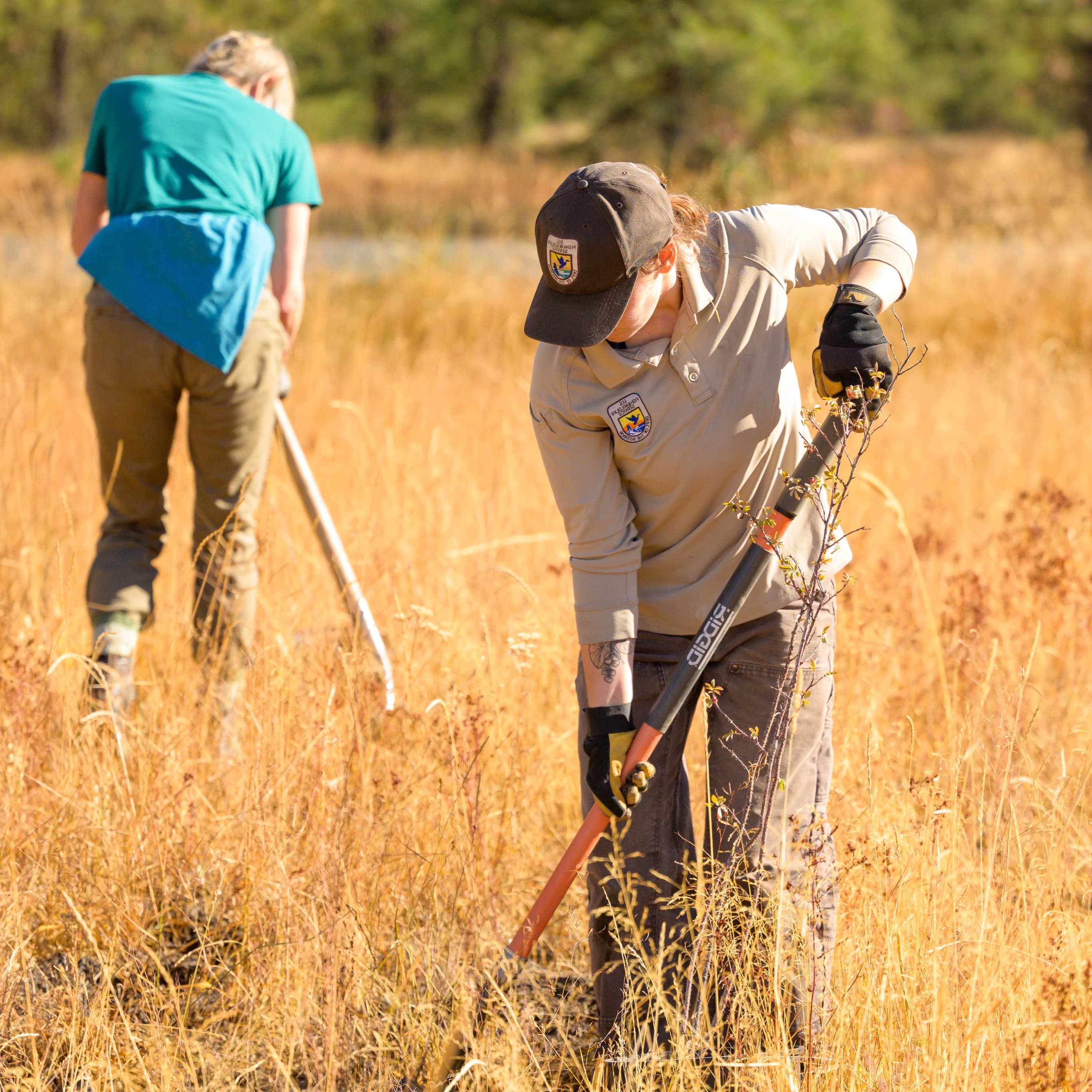
Invasive species are one of conservation's greatest struggles. Search for and pull invasive plants, and plant native plants! Several restoration projects need on-going plant removal. This opportunity often involves work days for a group of volunteers.
Trail Stewards
Our most flexible volunteer opportunity! Already hiking our trails? Report back to us about trail conditions, maintain interpretive signage, communicate with other refuge visitors, and more.
Education and Outreach
Sharing the stories of wildlife and conservation is an important part of ensuring a future full of land stewards and refuge support. There are many ways to contribute, from behind the scenes or on the front line. Opportunities include the environmental education program with local 4th grade students, tabling at community festivals and events, and assisting with the Wings Over Willapa festival each September.
Facilities Maintenance
Buildings, sign and trails take effort to maintain. Help inventory and maintain refuge signs, keep our headquarters grounds looking great or donate your carpentry skills.
Excited by something on the list or have unique talents you want to share? Contact us at willapa@fws.gov.
Working with others to conserve, protect, and enhance fish, wildlife, plants, and their habitats for the continuing benefit of the American people.
Services
About
Willapa National Wildlife Refuge was established in 1937 to protect migrating birds and their habitat at a time when many estuaries and shallow water bays were being destroyed. The refuge has grown to encompass diverse ecosystems including salt marsh, mud flats, forest, and coastal dunes, providing habitat for over 200 bird species. Managed as part of a complex that includes two other refuges, Willapa NWR consists of several locations around Willapa Bay, including Leadbetter Point and Long Island. Check out more in our refuge brochure.