


Visit Us
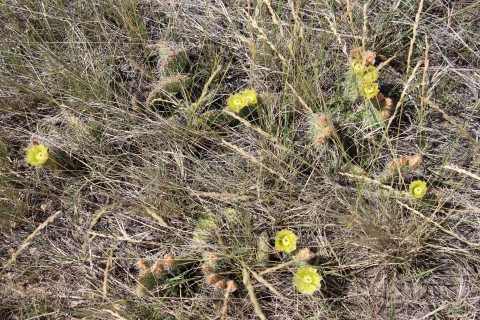
Hailstone National Wildlife Refuge (NWR) lies within the boundaries of the Charles M. Russell Wetland Management District in central Montana. Both are a part of the Charles M. Russell NWR Complex. Hailstone Refuge is open to hunting, wildlife observation, and photography.
Location and Contact Information
About Us

Hailstone National Wildlife Refuge was established as an easement Refuge in 1942 to provide a rest stop and breeding ground for migratory waterfowl. It also provides habitat for pronghorn. Many small mammals also exist here along with horned lizards, and rattlesnakes. The Refuge is 160-acres and is surrounded on three sides by the 1,828-acre Hailstone Waterfowl Production Area (WPA). The Refuge and WPA are jointly managed together as one unit.
What We Do
The overall management goal at this Refuge is to promote biological diversity and maintain the natural abundance of native plants and wildlife. Science is the foundation upon which conservation decisions are made. We use research, monitoring and the best-available science to inform our work to conserve fish, wildlife, plants, and their habitat.

Projects and Research
Projects and research are used to improve scientific knowledge of natural resources and ecological processes to inform Refuge management through monitoring and applied research.
The ever evolving and complex changes and threats to our natural resources and ecological processes make it necessary to constantly improve our scientific knowledge of the species and habitats we are entrusted to protect. Using a science-based approach of various research methodologies and inventories to continue to fill critical knowledge gaps will help us focus management on actions that have the greatest conservation benefit for the Refuge's wildlife and their habitat needs.