


States
Guam, Northern Mariana IslandsThe U.S. Fish and Wildlife Service is proposing critical habitat designations for 22 native plants and animals in the Territory of Guam and on multiple islands in the Commonwealth of the Northern Mariana Islands (CNMI). The Service looks forward to further engaging with the public during the open comment period from now until June 22, 2026. We anticipate delivering a final rule to the Federal Register by March 24, 2027.
Explore the information below:
- BACKGROUND
- WHAT IS CRITICAL HABITAT?
- PUBLIC COMMENT INFORMATION
- THE 22 SPECIES
- FREQUENTLY ASKED QUESTIONS
Resources:
- Proposed Rule
- News Release
- Proposed Critical Habitat Maps
- Online Mapper (Shapefiles available upon request)
- Information Sheets (Coming Soon)
We welcome questions at any time during this process! Please contact Lindsy Asman, Listing and Classification Program Manager at the Pacific Islands Fish and Wildlife Office at MarianasCriticalHabitat@fws.gov.

BACKGROUND
When a species is proposed for listing as endangered or threatened under the Endangered Species Act, we are required, to the maximum extent prudent and determinable, to identify areas on which are found those physical and biological features that are essential for the conservation of the species; and which may require special management considerations or protections — also known as the species’ critical habitat. All 22 species are found only in the Mariana Islands archipelago and were listed as endangered or threatened in 2015 (80 FR 59424).
These species and their native forested and savanna habitats are threatened by habitat degradation and destruction by invasive species invasive species
An invasive species is any plant or animal that has spread or been introduced into a new area where they are, or could, cause harm to the environment, economy, or human, animal, or plant health. Their unwelcome presence can destroy ecosystems and cost millions of dollars.
Learn more about invasive species (e.g.,nonnative hooved-animals, plants, rats, brown tree snakes), development, and other natural or manmade factors such as typhoons and fires. The interaction of these factors with the projected effects of climate change climate change
Climate change includes both global warming driven by human-induced emissions of greenhouse gases and the resulting large-scale shifts in weather patterns. Though there have been previous periods of climatic change, since the mid-20th century humans have had an unprecedented impact on Earth's climate system and caused change on a global scale.
Learn more about climate change may intensify negative impacts to these species and their native habitats. Critical habitat is a tool that supports the continued conservation of imperiled species in the face of threats in areas where a Federal nexus occurs (i.e., funded, permitted, or carried out by a Federal agency).
Separately, in 2023 the Service and NOAA proposed critical habitat designations for green sea turtle which is still a separate designation and currently still under review.
WHAT IS A CRITICAL HABITAT DESIGNATION?
Critical habitat is the designation of specific areas within the geographic area occupied by a species at the time it was listed as threatened or endangered under the Endangered Species Act of 1973 (ESA). The ESA requires the USFWS to designate critical habitat for a listed species to the maximum extent “prudent and determinable.” Critical habitat may also include areas outside the geographical area occupied by the species at the time of listing that are essential for the conservation of the species.
These specific areas contain the physical or biological features that are essential to the conservation of the species and may need special management considerations or protections. Examples of physical or biological features can include space for individual and population growth; cover or shelter; nutritional or physiological requirements: food, water, air, light, and minerals; sites for breeding and rearing offspring; and habitats that are protected from disturbances or are representative of the historical geographical and ecological distributions of a species.
Benefits of a critical habitat designation:
Designating critical habitat supports conservation by facilitating cooperation between the Service and other federal agencies and it increases awareness of areas that are important to a species’ conservation and recovery, which fosters public stewardship in these areas.
Who do critical habitat designations impact?
Federal agencies are required to consult with USFWS on any action that may affect an ESA-listed species or designated critical habitat. Critical habitat designations may overlap public and private lands but are only consulted on by Federal agencies when the actions are authorized, implemented, or funded by a Federal agency.
In some cases, public or private actions may have a Federal nexus because they are funded, authorized (permitted) or carried out by a Federal agency. However, the Federal agency, not the landowner, is responsible for addressing any effects to critical habitat and ensuring these actions do not destroy or adversely modify the essential physical or biological features of critical habitat. Also, when an action may affect critical habitat, the Federal agency is already required to consult on any effects to federally listed species and must avoid jeopardy of the species.
Critical habitat DOES NOT:
- affect land ownership or establish a refuge, wilderness reserve, preserve, or other conservation area conservation area
A conservation area is a type of national wildlife refuge that consists primarily or entirely of conservation easements on private lands. These conservation easements support private landowner efforts to protect important habitat for fish and wildlife and major migration corridors while helping to keep agricultural lands in production.
Learn more about conservation area - allow the government or public access to private property; nor does it
- require implementation of restoration, recovery, or enhancement measures by non-Federal landowners.
Proposed critical habitat for the 22 species overlaps 1% of already designated critical habitat on Guam (257 ac), and 63% of already designated critical habitat on Rota (8,244 ac).
Critical habitat already exists on Guam and Rota, CNMI for four species
- Corvus kubaryi (Mariana crow or åga ChG & ChCNMI) on Guam and Rota, CNMI
- Pteropus mariannus (Mariana fruit bat, fanihi ChG & ChCNMI, pai’scheel Ca) on Guam
- Todiramphus cinnamominus (Guam kingfisher or sihek ChG) on Guam
- Zosterops rotensis (Rota bridled white-eye or nosa’ Luta) on Rota, CNMI
ChG = Chamorro name in Guam’s spelling, ChCNMI = Chamorro name in CNMI’s spelling, Ca = Carolinian name, NCN = no common name

PUBLIC COMMENTS & MEETINGS
We welcome comments or information from other governmental organizations, indigenous communities and organizations, the scientific community, industry, or any other interested persons or parties. What kind of comments are we looking for? See FAQs below
Comments can be submitted electronically or by mail. All comments must be received or postmarked on or before June 22, 2026. Comments submitted electronically using the Federal eRulemaking Portal must be received by 11:59 p.m. eastern time on the closing date.
Electronic Submission:
- Go to the Federal eRulemaking Portal: https://www.regulations.gov.
- Search docket number FWS-R1-ES-2024-0194
- …elaborate e.g., Attach PDF or Word document…
Mail Submission:
Public Comment Processing, Attn: FWS-R1-ES-2024-0194, U.S. Fish and Wildlife Service, MS: PRB/3W, 5275 Leesburg Pike, Fall Church, VA 22041-3803
Public Meetings
We are actively planning four (4) in-person informational public meetings on Guam, Saipan, Tinian, and Rota. Meeting information including dates, times, and locations will be provided here, and notifications will be sent out broadly to inform the public in advance. Check back here soon!
The meetings will occur within the 90-day comment period that immediately opens on March 24, 2026, upon publication of the proposed rule in the Federal Register. Opportunity to provide oral comments will be made available in addition to receiving hand-delivery of anonymous and non-anonymous written or printed comments to FWS staff.
THE SPECIES
Plants
- Bulbophyllum guamense (wild onion, siboyas hålomtåno’ChG, siboyas hålumtånu’ChCNMI, siboyan hålom tåno’Ca) - Threatened
- Cycas micronesica (fadangChG & ChCNMI, faadangCa) - Threatened
- Dendrobium guamense (no common name) - Threatened
- Eugenia bryanii (no common name) - Endangered
- Hedyotis megalantha (pao de’do’ChG, paode’do’ChCNMI, pao dooduCa) - Endangered
- Heritiera longipetiolata (ufa hålumtånu’ChG, ufa’ hålomtåno’ChCMNI, ufa’ hålomtåno’ Ca) - Endangered
- Maesa walkeri (no common name) - Threatened
- Nervilia jacksoniae (no common name) - Threatened
- Phyllanthus saffordii (maigo’ lålo’ ChG) - Endangered
- Psychotria malaspinae (aplohkåteng palao’anChG, åplokhating palao’anChG, aplokkating palåo’anChCNMI) - Endangered
- Tabernaemontana rotensis (no common name) - Threatened
- Tinospora homosepala (no common name) - Endangered
Tuberolabium guamense (no common name) – Threatened

Insects
- Hypolimnas octocula marianensis (Mariana eight-spot butterfly, ababangChG, ababbangChCNMI, libweibwoghCa) - Endangered
- Ischnura luta (Rota blue damselfly, dulalas LutaChG, ChCNMI, Ca) – Endangered
Vagrans egistina (Mariana wandering butterfly ababangChG, ababbangChCNMI, libweibwoghCa) - Endangered

Tree Snails
- Partula gibba (Humped tree snail, dengdengChG, dengdingChCNMI, akaleha’ChG & ChCNMI, dendenCa) - Endangered
- Partula langfordi (Langford’s tree snail, dengdengChG, dengdingChCNMI, akaleha’ChG & ChCNMI, dendenCa) – Endangered
- Partula radiolata (Guam tree snail, dengdengChG, dengdingChCNMI, akaleha’ChG & ChCNMI, dendenCa) - Endangered
Samoana fragilis (Fragile tree snail, dengdengChG, dengdingChCNMI, akaleha’ChG & ChCNMI, dendenCa) - Endangered

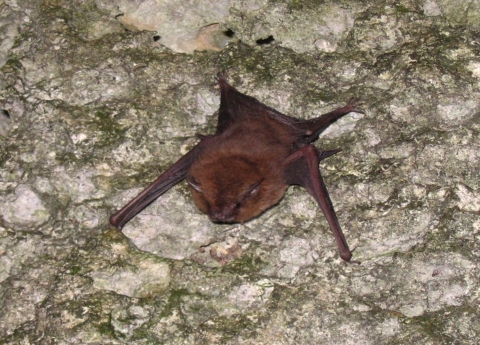
Bats
- Emballonura semicaudata rotensis(Pacific sheath-tailed bat, paye’ye’ChG, payesyesChG, fanihen gånasChG, paye’yi’ChCNMI, payesyisChCNMI, fanihin gånasChCNMI, paischeeyChCNMI) – Threatened
Reptiles
Emoia slevini (Slevin’s skink, Marianas Emoia, Mariana skink, guåli’ek hålomtåno’ChG, gholuufCa, guali’ik halumtånu’ChCNMI) – Threatened
FAQS
Q: Why is this critical habitat necessary?
A: The Mariana Islands species in this proposed rule are an important part of our Pacific Island communities, not only for the cultural and ecological roles fulfilled within their native ecosystems. Critical habitat designations contribute to recovery goals that are intended to prevent extinction of federally endangered or threatened species so that their populations and connection with current and future generations will continue to endure.
Q: What are critical habitat requirements?
A: Once critical habitat is designated, federal agencies must consult with the USFWS to ensure that any activities they authorize, fund, or carry out are not likely to destroy or adversely modify critical habitat. Critical habitat requirements do not apply to citizens engaged in activities on private land that do not involve a federal agency (for example, a private landowner undertaking a project that involves no federal funding or permitting). The designation of critical habitat does not affect land ownership or establish a refuge, wilderness reserve, preserve, or other special conservation area. Critical habitat designations also do not mandate government or public access to private lands.
Q: Where can I find maps and/or geospatial files of proposed and existing critical habitat?
A: Proposed critical habitat information for the 22 species (above) will be made available to the public upon publication of the proposed rule in the Federal Register. These resources will also be available on this webpage following the publication date. For existing critical habitat information, please visit: https://ecos.fws.gov/ecp/report/critical-habitat. Resource: Online mapper.
Q: What is the process for designating critical habitat?
A: When designating critical habitat, the USFWS is required to use the best available scientific data and information pertaining to the habitat requirements of any of the species in this proposed rulemaking. With this information we then evaluate and identify specific areas for proposed critical habitat within the geographical area occupied by the species, at the time it is listed, on which are found those physical or biological features essential to the conservation of the species and which may require special management considerations or protections; and specific areas outside the geographical area occupied by the species at the time it is listed, upon a determination by the Secretary that such areas are essential for the conservation of the species.
We will then propose a critical habitat designation rule, publishing it in the Federal Register and requesting public comments during an open comment period. We are suggesting to our Director to hold a 90-day comment period for this rulemaking including four (4) in-person public hearings on Saipan, Tinian, and Rota in the CNMI; and on Guam.
The proposed rule may be modified because of information provided in the received public, partner, and peer reviewer comments. The final critical habitat designation will be based on the best available scientific data and consideration of probable economic or other impacts of the designation.
Q: How can I provide comments during the open comment period?
A: Comments can be submitted electronically or by mail. More detailed information is available in the proposed rule.
Q: What kind of information will we be looking for during the open comment period?
A: Comments or information from other governmental agencies, indigenous communities and organizations, the scientific community, industry, peer reviewers, or other interested parties including, but not limited to the following bullets. More information will be made available in the proposed rule upon publication in the Federal Register.
- Species or area specific information (e.g., distribution)
- Ensuring community engagement with specific community groups
- Reasons why we should or should not designate critical habitat
- Specific species information such as amount and distribution
- Benefits of excluding a proposed area; probable economic or national security impacts
Q: Can areas be excluded from critical habitat?
A: Yes. An area may be excluded from a final critical habitat designation on the basis of the best available scientific data after taking into consideration the economic impact, national security impact, and any other relevant impact of specifying any particular area as critical habitat. We would conduct an analysis to evaluate whether the benefits of excluding an area outweigh the benefits of including it in the critical habitat designation, unless failure to designate the area as critical habitat may lead to extinction of the species.
The following lands are proposed for exclusion from critical habitat designation based on conservation benefits provided by the Talakaya Integrated Watershed Management Plan protected by Rota Local Law 15-8, the Mariana Crow Conservation Area and accompanying Memorandum of Agreement, and the Sabana Protected Area:
Q: Why are lands managed by the Department of War (formerly Department of Defense) exempt from the proposed critical habitat designation?
A: There is a legal basis for lands managed by the Department of War to be exempt from critical habitat designations. Under section 4 of the ESA, the Secretary shall not designate as critical habitat any lands owned or controlled by the Department of Defense that are subject to an Integrated Natural Resources Management Plan (INRMP), provided the Secretary determines in writing that the INRMP benefits the species in question. This exemption was created to balance species conservation with national defense needs. The USFWS works with all military installations to develop and implement comprehensive plans for natural resource conservation and management. Development and implementation of the INRMP is required under the Sikes Act. The INRMPs undergo in-depth review and approval processes by the military officials, USFWS, States, and Territories approximately every 5 years. These plans focus on ecosystem-based management with a goal of managing natural resources to meet stewardship requirements while supporting, and even enhancing, military operations. The following lands are exempted from critical habitat designation based on the Joint Region Marianas INRMP providing conservation benefits:

Q: How does critical habitat affect me?
A: Critical habitat designations affect only Federal agency actions or federally funded or permitted activities. Critical habitat designations do not affect activities by private landowners if there is no Federal “nexus”—that is, no Federal funding, permit, or license involved. Federal agencies are required to avoid “destruction” or “adverse modification” of designated critical habitat. Federal agencies work with the USFWS to amend their projects, enabling it to proceed without adversely affecting critical habitat. Most federal projects are likely to go forward, but some may be modified to minimize harm.
The designation of critical habitat does not impose a legally binding duty on non-Federal Government entities or private parties. Critical habitat does not affect private land ownership or activities if there is no federal nexus. Critical habitat does not mandate government or public access to private lands; and does not establish a refuge, wilderness reserve, preserve, or other special conservation area.
Q: How will the designation of critical habitat help the 22 Mariana Island Species?
A: Designation of critical habitat will provide a tool to guide Federal agencies in fulfilling their conservation responsibilities by requiring them to consult with the Service if their actions may “destroy or adversely modify” critical habitat for the 22 Mariana Island species. A critical habitat designation helps to protect areas necessary to conserve a species.
Q: Will the designation of critical habitat affect private landowners?
A: Critical habitat designation does not affect activities by private landowners if there is no federal “nexus”— that is, no federal funding or permits are required to carry out the activity.
Identifying critical habitat informs landowners and the public which specific areas are important to a species’ conservation and recovery. It also raises awareness of the habitat needs of imperiled species and helps to focus conservation efforts with our partners.
Designation of critical habitat does not:
- Affect land ownership
- Allow the government to take or manage private property
- Establish a refuge, reserve, preserve, or other conservation area
- Allow government or public access to private land

