Written By


To celebrate America's 250th birthday, we at the U.S. Fish and Wildlife Service are highlighting the incredible wildlife that calls this beautiful country home. From American icons to subtle specialists, join us as we highlight seven species each week: one species for each of the 250 days leading up to America's 250th birthday.
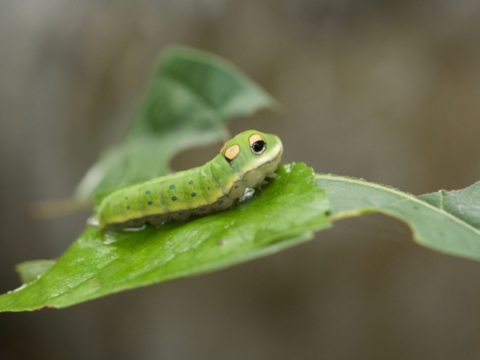
Spicebush swallowtail (Papilio troilus)
The spicebush swallowtail can be found across most of the eastern United States. It gets its name from the spicebush, a host plant that its caterpillars eat. Additional host plants include white sassafras and possibly prickly ash, tulip tree, sweetbay, camphor and redbay. Females will soon begin to lay eggs, kicking off the next generation.
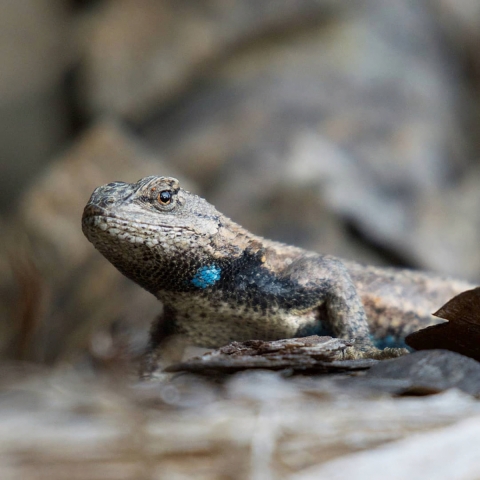
Eastern fence lizard (Sceloporus undulatus)
The eastern fence lizard is a spiny, scaled reptile found in woodlands, rocky outcrops and sunny clearings through much of the eastern United States. In the spring, males have bright blue patches on their bellies and throats. This time of year, watch for them basking in the sun and searching for mates.
Cedar waxwing (Bombycilla cedrorum)
The cedar waxwing is a sleek, social songbird known for its silk plumage, black mask, bright red feather tips and tendency to get a little tipsy. As these birds travel in flocks and forage, they sometimes find fermented berries!

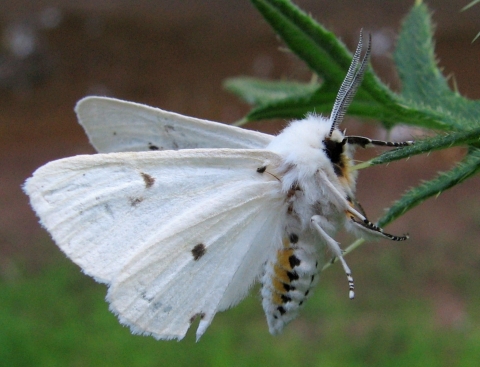
Virginia tiger moth (Spilosoma virginica)
The Virginia tiger moth is a fluffy, white moth with subtle black spots. Its caterpillar is often called the yellow woolly bear - named after its long fuzzy hairs. This time of year, caterpillars that overwintered are transforming into adults that will soon take flight. While they can be found across much of North America, they're more common in the west.
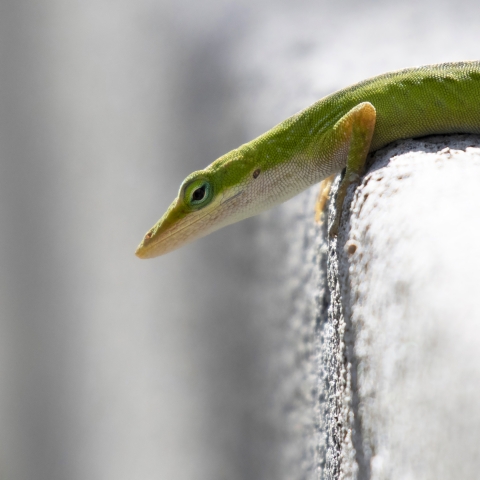
Green anole (Anolis carolinensis)
The green anole is a small tree-dwelling lizard found in the southeastern United States. It's known for its ability to change color from bright green to brown and for the male's bright pink throat fan. This time of year, watch for them basking in the sun and defending territories.
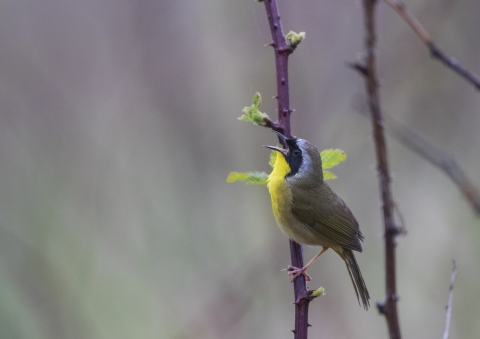
Common yellowthroat (Geothlypis trichas)
The common yellowthroat is a small, energetic warbler known for its bright yellow throat, the male's black mask and distinctive song. Found across much of North America, they prefer dense shrubs near wetlands where they forage for insects.
Spotted salamander (Ambystoma maculatum)
The spotted salamander is a secretive amphibian with striking yellow or orange spots running down its sleek, dark body. Found across much of the eastern U.S., they spend most of their lives hidden underground. This time of year, these salamanders are on the move, migrating through rainy nights to breeding pools.