Every year around the third week of May, a quiet but monumental effort takes place along the West Coast of the United States. From Washington State down to San Diego, California, biologists, volunteers and conservationists come together for one purpose: to count a tiny bird the size of a sparrow, the western snowy plover.
This isn’t just any bird count. It’s the breeding window survey — a massive, coordinated census that spans the entire range of the species. The idea is simple: get a snapshot of the population while most of the plovers have settled into their nesting territories. The execution; however, is anything but easy.
"Shorebirds like snowy plovers don’t make it easy," shared Micah Ashford, fish and wildlife biologist with the Arcata Fish and Wildlife Office. “They may not flock like other birds, but they’re still fast and wary. You have to be sharp and patient.”

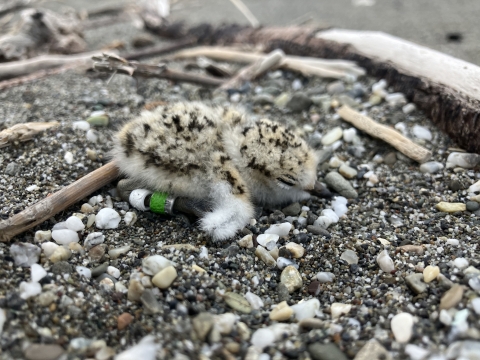
Each bird is carefully tallied, sometimes identified by tiny color bands on their legs, which help prevent double-counting. These bands, like little nametags, allow researchers to track individuals and better understand the population as a whole.
The first official breeding window survey happened in 1991 and since 2004 it’s become an annual event. The numbers tell a compelling story. Back in 2023, the count revealed just 2,336 snowy plovers. In 2024, that number rose to 2,676. And in 2025, the most recent survey, the count reached 3,018 — breaking 3,000 for the first time since the recovery plan was developed.
Why does this matter?
“Three thousand birds is the first major recovery benchmark for the species,” Ashford explained. “We need to maintain that number for ten consecutive years to revisit the western snowy plover’s listing status.
“The count doesn’t tell us everything. It can’t explain changes in habitat or breeding success in real time, but it’s the best tool we have for tracking population trends across a wide range of locations and management styles.”
Behind the numbers lies a powerful network of people and partnerships. Hundreds of partners play a role, from federal and state agencies to nonprofits, universities and citizen scientists. It’s a model of collaboration that’s proving to be effective, thanks in part to habitat restoration, predator management and public outreach.

“We wouldn’t be here without the hard work of so many,” said Ashford. “It really is a community effort.”
But while reaching the 3,000-bird milestone is cause for celebration, there’s still a long way to go. Yet, for the first time in decades, the future of the western snowy plover is beginning to look a little brighter.
“This growth reflects broader conservation progress across the species’ listed range, where many populations are now stable or increasing,” said Nora Papian, deputy field supervisor with Arcata Fish and Wildlife Office. “Although several recovery criteria still need to be met, the overall trajectory indicates that the plover is making strong, steady progress toward recovery.”
So, what can the average beachgoer do?
“Share the beach,” Ashford shared. “If you see areas with symbolic fencing during the nesting season, give those areas space. Respect local beach guidelines that may be in place in your area. Pick up trash. And if you’re lucky enough to spot a plover, enjoy it — from a respectful distance.”
Because every bird counts. And every person can help.