Written By


To celebrate America's 250th birthday, we at the U.S. Fish and Wildlife Service are highlighting the incredible wildlife that calls this beautiful country home. From American icons to subtle specialists, join us as we highlight seven species each week: one species for each of the 250 days leading up to America's 250th birthday.
Texas horned lizard (Phrynosoma cornutum)
The Texas horned lizard is a unique reptile with a toad-like shape, crown of spines and unique ability to squirt blood from its eyes as a defense! Found in the arid grasslands and deserts of the southern U.S., its nickname is "horny toad" - a nod to its appearance.

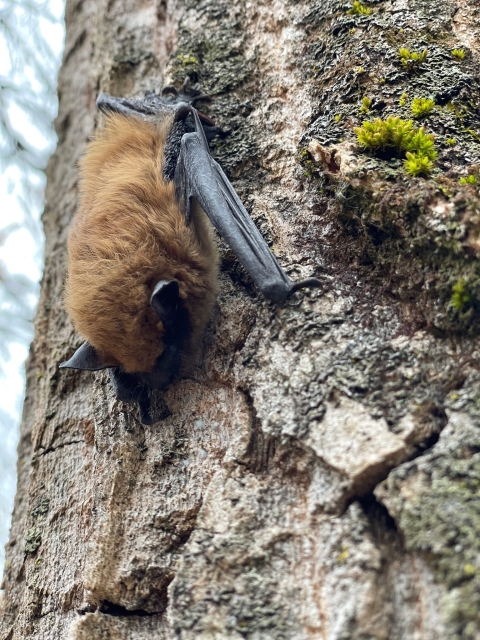
Big brown bat (Eptesicus fuscus)
The big brown bat is one of the most common and widespread bat species in North America. It has broad wings and an appetite for night-flying insects. This time of year, bats are active after spending the winter hibernating.
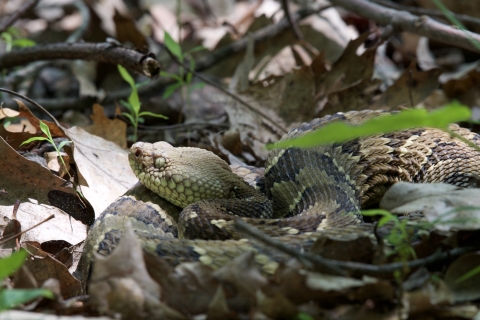
Timber rattlesnake (Crotalus horridus)
The timber rattlesnake is a large, venomous snake native to the eastern and central United States. These snakes are generally shy but will bite in self defense. They play an important role in controlling rodent populations so if you see one, just give it some space.
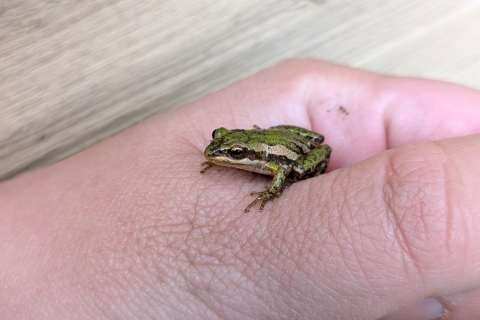
Boreal chorus frog (Pseudacris maculata)
The boreal chorus frog is a tiny amphibian found in grasslands, wetlands and forests across much of the U.S. and Canada. Measuring about an inch long, these little frogs can make loud, trilling calls that sound similar to running a finger down a comb. This time of year, is peak breeding season, so watch for these frogs in temporary pools and wetlands.
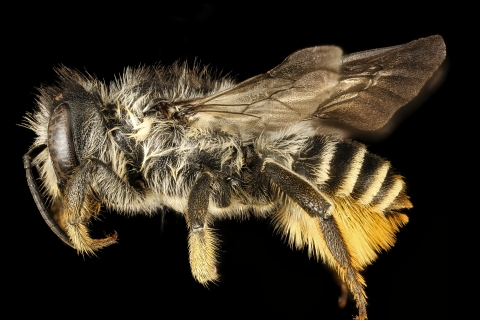
Golden-tailed leafcutter bee (Megachile relativa)
The golden-tailed leafcutter bee is a solitary pollinator found in forests, gardens and meadows across much of the U.S. and Canada. These bees have strong jaws that allow them to make precise circular cuts in leaves and petals, using them to build protective nests for young. Each cut piece is stocked with pollen and nectar along with a single egg - providing everything young will need.
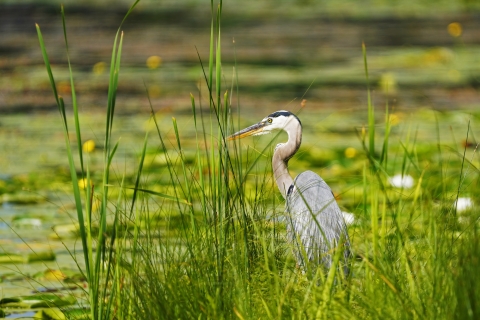
Great blue heron (Ardea herodias)
The great blue heron is known for its large size, slow graceful flight and dagger-like bill. Found near lakes, rivers, coasts and wetlands these birds are patient hunters, often standing still for long stretches before striking.
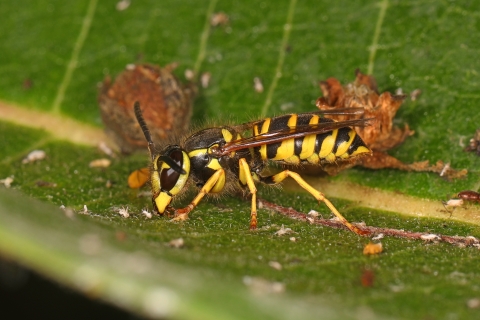
Eastern yellowjacket (Vespula maculifrons)
The eastern yellowjacket is a small wasp found throughout the eastern United States. These social insects prey on flies, caterpillars and other pests. This time of year, queens are focused on forming new colonies after overwintering alone.