


What We Do
Vision Statement: The Okefenokee is like no other place on earth; where natural beauty and wilderness character prevail. The vision for the Okefenokee National Wildlife Refuge is to protect and enhance wildlife and its habitat, ensure integrity of the ecological system, and embrace the grandeur, mystery, and cultural heritage that leads visitors to an enrichment of the human spirit.
Management and Conservation
Wilderness Management
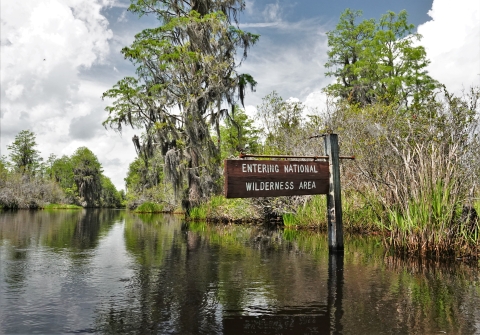
The establishment of the Okefenokee Wilderness by Congress on October 1, 1974, designated 353,981 acres within the existing refuge as a Class I Wilderness. This designation was supplemental to the purposes for which the refuge was established. Wilderness legislation provides additional environmental protection to the refuge from outside influences. This same legislation significantly increases the complexity of decision-making regarding the management of various refuge resources. The Okefenokee Wilderness is administered to preserve wildlife habitat, protect its wilderness character, and devoted to the public purposes of recreational, scenic, scientific, and educational use.
Visitor Services Management
The Visitor Services program at Okefenokee National Wildlife Refuge manages wildlife-dependent recreation for more than 400,000 visitors each year, supporting both meaningful outdoor experiences and the surrounding local economies.
The goal of Visitor Services on national wildlife refuges is to connect people with nature while protecting the refuge’s natural and cultural resources. Guided by the National Wildlife Refuge System Improvement Act of 1997, national wildlife refuges provide six priority public uses when compatible and appropriate with refuge purposes: hunting, fishing, wildlife observation, photography, environmental education, and interpretation.
Visitors at Okefenokee National Wildlife Refuge explore the refuge in many ways, including walking and paddling trails, camping, wildlife viewing, nature photography, and participating in traditional heritage sports such as hunting and fishing. Many begin their experience at the Richard S. Bolt Visitor Center, where exhibits and staff help orient guests to the refuge’s unique ecosystems.
Balancing recreation with conservation is central to our philosophy. Through careful facility design and strategic planning, visitor use is concentrated in designated areas, allowing much of the refuge to remain undisturbed and preserving critical habitat for threatened and endangered species.
Fire Management
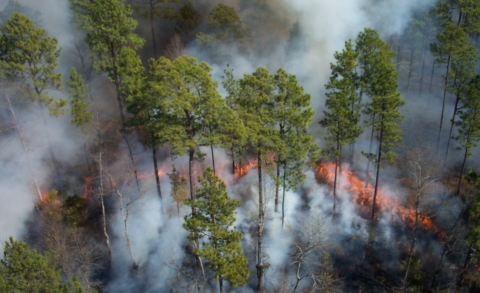
Fire has played an important role in the formation of the Okefenokee Swamp. Fires ignited by Native Americans and early settlers for cultural reasons added to the impacts of lightning-caused fires. Today, prescribed fire is used predominately in the uplands adjacent to the swamp to maintain the longleaf pine and wiregrass community and to reduce fuels that accelerate wildfires.
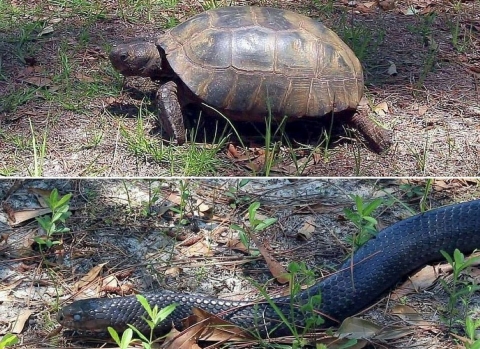
Longleaf pine, along with many of its associated wildlife species, including the red-cockaded woodpeckers, gopher tortoises, and eastern indigo snakes, benefit from fire. Many species of plants have adapted to fire and require it for growth, maturity, and survival.
Fire occurs naturally in the swamp mostly due to lightning strikes. Wildland fire remains a natural and desirable occurrence within the swamp. However, adjacent private lands, industrial forests, refuge facilities, and growing urban interface areas require careful fire management to protect property and surrounding habitats. Prescribed burning is a resource and fire prevention tool used to restore habitats and reduce the intensity of wildland fires.
Strategies using natural and prescribed fire to accomplish refuge management goals:
- All wildland fire will be managed in a safe and efficient manner, utilizing the best methods to produce little impact on the environment and private property. Refuge fire-management personnel maintain $3 million worth of equipment to accomplish prescribed and wildfire management projects. Fire-management and step-up plans dictate the level of readiness to be maintained throughout the year.
- Dormant (winter) and growing (summer) season prescribed fire will be used to reduce hazard levels of existing fuels and to restore fire-dependent, grassy fuel types where brush types now exist. The fire staff burns an average of 6,000 to 10,000 acres per year.
- Develop cooperative ventures with adjacent landowners to aid in management of swamp perimeter fires. Most cooperative ventures will be accomplished through the 80-member GOAL organization representing 20 major landowners surrounding the Okefenokee Swamp.
- Replace historic fire seasons and frequencies with prescribed fire to restore and maintain longleaf pine habitats throughout refuge uplands.
- Restore habitat diversity across refuge wetlands making use of pre- scribed and natural fire.
- Continue developing a fuel-management zone around the perimeter of the swamp to allow more natural control of fire within the swamp.
Endangered and Threatened Species Management
The refuge protects and manages habitat for federally listed threatened and endangered species through a strong emphasis on restoring and maintaining historic ecosystems. Much of the refuge’s wildlife evolved within fire-dependent longleaf pine and wetland systems shaped by frequent natural fire, seasonal flooding, and minimal human disturbance.
Historic habitat management is central to species recovery efforts. Prescribed fire is used to restore natural fire cycles that maintain open, longleaf pine forests and native wiregrass communities. These conditions are essential for species such as the red-cockaded woodpecker, which depends on mature pine stands, as well as the eastern indigo snake and Gopher tortoise, which all require healthy upland habitats.
Management also focuses on protecting wetland hydrology and allowing natural fire within the swamp to sustain habitat diversity. By mimicking those historical natural processes, the refuge promotes resilient ecosystems that support self-sustaining populations of listed species while preserving the ecological integrity of the lands and waters of the refuge.
Upland Forest Management
The refuge contains 44,026 acres of upland forest out of 406,650 total acres, meaning almost 11% of refuge lands are categorized as upland forest.
- 21,000 acres are in forest management compartments along the swamp perimeter
- 6,654 acres along Trail Ridge are managed by Forest Investment Associates
- Remaining uplands occur on wilderness islands
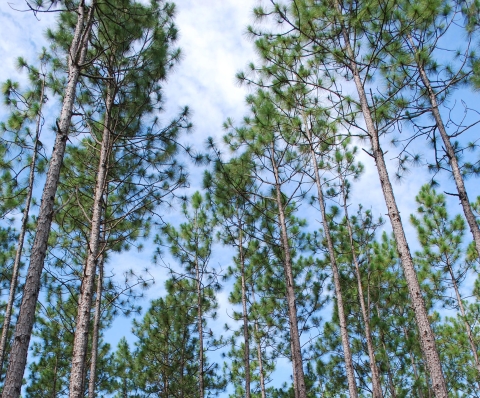
Primary objectives include restoration, management, and protection of longleaf pine communities, which support species such as the red-cockaded woodpecker, Bachman’s sparrow, gopher tortoise, eastern indigo snake, flatwoods salamander, gopher frog, Sherman’s fox squirrel, and many other wildlife species common to the southeastern coastal plain.
Historically, longleaf pine ecosystems dominated the southeastern coastal plain. Due to fire suppression and land conversion, only about 3% of original longleaf pine habitat remains in the Southeast.
Restoration and Management of Longleaf Pine Forests
- Restoration of pure longleaf pine stands in mixed pine stands by selective thinning
- Promotion of natural longleaf regeneration
- Longleaf seedling planting
- Establishment of diverse age classes in large, even-aged, longleaf pine stands
- Destruction of competing hardwood midstory and loblolly seedlings
- Habitat surveys assessing age, size, crown density, basal area, and species composition
- Dormant and growing season prescribed burns and monitoring of prescribed burning effects
Our Services
Apply for a Special Use Permit
Some commercial, recreational, or research activities are allowed on national wildlife refuges only with a special use permit issued by the local office and are subject to specific conditions and fees. This permit requirement is meant to ensure that all activities at the federal site are compatible with the refuge’s Congressionally mandated wildlife conservation goals. Special use permits may limit the scope, timing and location of the activity, as determined by the refuge where the activity would take place.
Prospective permit holders may fill out the corresponding permit application, sign it, and return it to the refuge for processing. Please submit by email to okefenokee@fws.gov. The permit is not valid until approved and signed by a refuge official. Allow for 30 working days to process the permit.
Commercial Activities Special Use Permit Application (FWS Form 3-1383-C) for
- Commercial activities such as overnight guiding, day-use guiding for paddling groups or anglers, or other outdoor users.
- For camping reservations, please visit Recreation.gov.
Commercial Special Use Application
Research and Monitoring Special Use Permit Application (FWS Form 3-1383-R) for
- Research and monitoring activities by students, universities, or other non-FWS organizations.
Research and Monitoring Special Use Application
General Activity Special Use Permit Application (FWS Form 3-1383-G) for
- Filming, still photography, and audio recording (when required based on group size and potential impacts; contact site manager for details)
- Miscellaneous events (fishing tournaments, educational activity, one-time events, other special events)
General Activities Special Use Application
Commercial Guiding Special Use Permits
A Commercial Guide Permit is required for any person or business (including non-profit organizations) who charge or include a fee for guiding on the refuge. Okefenokee has defined two types of commercial guide permits: day-use and overnight. Individuals and businesses may apply for one of both permits. Each Commercial Guide must comply with Special Conditions of the Special Use Permit to ensure compatibility. Read the Special Conditions for Commercial Guides.
Commercial Overnight Guiding Permit
Issued for: Guides or organizations that lead overnight paddling trips for a fee.
Length of Permit: 1 year (October 1-September 30)
Annual Permit Fee: $200/year to be paid at beginning of permit period
Number of Permits Issued Annually: Up to 15 Overnight Guiding Permits are issued on a first-come, first-serve basis.
Minimum Requirements
- Certificate of Insurance ($500,000/occurrence General Liability)
- Current First Aid and CPR Training for all employees
- Pay Annual Permit Fee
Entrance Fees: Pay Wilderness Canoe Camping Permit fees as described. The refuge entrance fee is included in the overnight canoe permit fee. Read more about entrance fees on the Visit Us page.
Overnight Camping Permit Reservations Guides will not receive any special privileges in scheduling or reserving overnight camping sites through the reservation system. Call the Camping Permit Reservation line at 912-496-3331, available Tuesday to Thursday from 7:00 am to 10:00 am.
Commercial Day-Use Guiding Permit
Issued for: Guides or organizations who lead activities including fishing, wildlife observation, wildlife photography, environmental education, and interpretation for a fee.
Length of Permit: 1 year (October 1-September 30)
Annual Permit Fee: $50/year to be paid at beginning of permit
Number of Permits Issued Annually: Up to 100 total Day-Use Guiding Permits are issued on a first-come, first-serve basis.
Minimum Requirements:
- Certificate of Insurance ($300,000/occurrence General Liability)
- Current First Aid and CPR training for all employees
- Pay Annual Permit Fee
Entrance Fees: Entrance fees are based on the number of passengers in a vehicle: up to nine people in vehicle: $5/day, 10-25 people: $25/day, 26 or more: $50/day. Read more about entrance fees on the Visit Us page.
How to Apply
An application is required annually. If supporting documentation is not received by the established deadline, the permit will be revoked. Incomplete applications will not be considered. Application packages containing false statements and/or fraudulent or misleading information will be denied, and the application fee will be forfeited.
- Complete and sign the Commercial Special Use Application (Form FWS Form 3-1383-C)
- Gather the required supporting documentation
- Proof of Insurance with adequate Comprehensive General Liability coverage
- Overnight Guides: Minimum limit of liability being $500,000 per occurrence
- Day-Use Guides: Minimum limit of liability being $300,000 per occurrence
- Proof of current and valid First Aid/CPR certification for all guides
- Annual Permit Fee. (Refuge staff will contact you for credit card payment over the phone prior to permit issuance)
- Overnight Guides: $200/annually
- Day-Use Guides: $50/annually
- Proof of Insurance with adequate Comprehensive General Liability coverage
- Submit your application and all supporting documents by September 1 annually to receive the annual permit for the season by October 1. Send by email or mail to:
- Email to Okefenokee@fws.gov
- Mail to Okefenokee NWR, 2700 Suwannee Canal Road, Folkston, GA 31537
Our Projects and Research

Red-Cockaded Woodpecker Research and Management
At the Okefenokee National Wildlife Refuge, long-term research and active management of the red-cockaded woodpecker are central to our conservation mission. Staff, interns, and volunteers dedicate extensive field hours each spring and summer to monitoring nesting activity, reproductive success, and population dynamics across the refuge.
Nest Monitoring and Banding
Biologists monitor woodpecker cavities using a specialized “peeper”, a telescoping pole fitted with a small camera, allowing them to observe egg laying and hatching with minimal disturbance. Once nestlings hatch, they are fitted with unique color band combinations that enable researchers to track individual birds throughout their lives. Fledglings continue to be monitored to assess survival, dispersal, and group composition.
This intensive monitoring provides critical data on productivity, recruitment, and long-term population trends.
Population Status and Distribution
The refuge currently supports 99 red-cockaded woodpecker clusters (family groups occupying a set of cavity trees), of which 53 are active. Clusters are located in forested uplands surrounding the swamp and on interior upland islands within the wilderness.
- 36 active and 23 inactive clusters occur along the perimeter
- 17 active and 23 inactive clusters occur on interior islands
The refuge’s recovery objective is 86 potential breeding groups based on available pine acreage capable of supporting a self-sustaining population.
Although the refuge contains 24,413 acres of suitable habitat, it is fragmented. Of this total:
- 12,444 acres occur in intensively managed upland forestry compartments
- 11,969 acres are distributed across 11 interior islands
Habitat fragmentation (caused by natural swamp barriers and adjacent private industrial lands) limits interaction among groups and complicates dispersal. Four distinct refuge populations have been identified, each managed using strategies tailored to site conditions and accessibility.
Wilderness Area Research
Approximately 32 percent of the refuge’s red-cockaded woodpecker groups occupy upland islands within the Okefenokee Wilderness, accessible only by helicopter. In keeping with wilderness policy, management on these islands relies solely on natural processes and prescribed fire. Artificial cavities and intensive silvicultural practices are not used.
While banding is not currently conducted on interior islands due to logistical constraints, breeding-season surveys and cavity inspections provide essential data on occupancy, productivity, and habitat suitability.
Perimeter Habitat Management
Refuge lands along the perimeter of the swamp are more intensively managed for native longleaf pine communities. Prescribed fire and selective silviculture have produced high-quality habitat conditions characterized by open understories, minimal mid-story encroachment, and a strong longleaf pine component.
On these lands:
- Adults and nestlings are banded to monitor dispersal and group dynamics
- Artificial cavity inserts or drilled cavities are installed to ensure each cluster maintains at least four suitable nesting sites
Translocation and Population Support
To address declining active clusters along the refuge perimeter, translocation efforts began in 1998. Between 1998 and 2013, 40 birds were introduced from other populations, with 28 successfully integrating into refuge groups. These efforts strengthened genetic diversity and stabilized vulnerable clusters.
Long-Term Conservation Goals
Research and management efforts focus on restoring historic longleaf-wiregrass ecosystems while supporting a resilient, self-sustaining red-cockaded woodpecker population. By integrating habitat restoration, population monitoring, and adaptive management, the refuge continues to advance recovery of this endangered species while benefiting the broader native wildlife community.
Law Enforcement
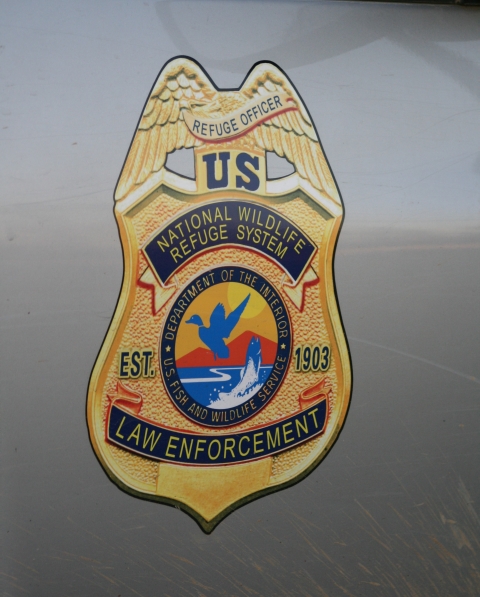
Law Enforcement is critical to every aspect of wildlife conservation. The mission of the Law Enforcement program is to support the administration of the National Wildlife Refuge System through management and protection of natural, historical, and cultural resources, property, and people on lands and waters of our National Wildlife Refuges.