


Visit Us
Bear River Migratory Bird Refuge, located in Brigham City, Utah, offers a variety of outdoor recreation opportunities. On our 12-mile Auto Tour Route, view a great diversity of birds without ever leaving your vehicle. Want to stretch your legs? Walk the 1.5 miles of trails around our world-class Visitor Center located just 1/4 mile from I-15, exit 363.
The Visitor Center is open Tuesday through Saturday, 10:00 am to 4:00 pm. The Auto Tour Route, Wetland Wonders, Bulrush Bridge, and Marsh Meander trails continue to be open sunrise to sunset Monday through Sunday.
Enjoy photography, wildlife watching, birding, hiking, cycling, running, hunting, fishing, and painting on the Refuge. Check our page often for special events and environmental education opportunities.
Location and Contact Information
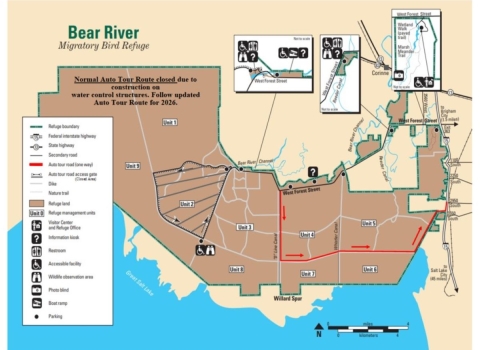
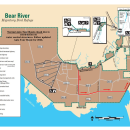
Starting on Saturday, April 4 and lasting through mid-September, the regular Auto Tour Route at Bear River Migratory Bird Refuge will temporarily close. An alternate Auto Tour Route will be available to visitors while water control structures along the regular route are improved and replaced. Similar to the regular Auto Tour Route, this alternate route is a 12-mile, one-way vehicle route easily accessible from West Forest Street. Maps will be available at all Refuge kiosks and at the Visitor Center while the alternate route is open.
The alternative Auto Tour Route is in an area of the Refuge normally closed to the public and vehicles. The route will take visitors down the Refuge's O-Line Canal Road and onto the D-Line Canal Road which connects the Refuge to the Great Salt Lake. These normally closed roads will allow visitors glimpses of a wide variety of wildlife including many nesting bird species such as the American avocet and other migratory shorebirds.
The Refuge's regular Auto Tour Route and Unit 2 will re-open and be available for public use by the start of Northern Utah's youth waterfowl hunt opening weekend. The normal Auto Tour Route's Day-Use Area will also remain open throughout the duration of the maintenance project enabling visitors to still utilize that area for fishing, birding, and outdoor recreation.
Visitors will still be able to enjoy outdoor recreation activities in all other open areas of the Refuge during the regular Auto Tour Route closure. For more information, and to talk with staff directly about the route, please join us on Saturday, April 4 for our Freedom 250 event to celebrate America's 250 anniversary with the grand opening of the temporary Auto Tour Route. Thank you for your commitment to the Refuge as we update and make your public lands safer and more accessible.
About Us
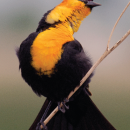
The Refuge lies along the eastern edge of the Pacific Flyway and the western edge of the Central Flyway, making it an important resting, feeding, and nesting area for birds in both flyways. Of the more than 250 bird species that use the Refuge, 67 species nest on the Refuge. American avocets and black-necked stilts nest by the thousands along Refuge dikes and roads. White-faced ibis nest in dense emergent vegetation in large colonies of up to 10,000 birds. Migrant tundra swans can number in the tens of thousands in the spring and fall. The Refuge uses a complex system of dikes and water control structures to provide different water depths for a variety of waterbird species over the seasons.
Tours
Bear River Migratory Bird Refuge provides an abundance of different activities to enjoy and learn about nature. On our 12-mile Auto Tour Route, view a great diversity of birds without ever leaving your vehicle. Want to stretch your legs? Walk the 1.5 miles of trails around our world-class Visitor Center located just 1/4 mile from I-15, exit 363.
What We Do
Wildlife conservation is at the heart of the National Wildlife Refuge System. It drives everything on U.S. Fish and Wildlife Service lands and waters, managed within the Refuge System, from the purposes for which a National Wildlife Refuge is established to the recreational activities offered to the resource management tools used. Using conservation best practices, the Refuge System manages Service lands and waters to help ensure the survival of native wildlife species.
Refuge staff use a variety of habitat management techniques to maintain, recover or enhance plant and wildlife values. Management techniques are carefully considered and employed in varying degrees according to needs.
Our Organization
As part of the National Wildlife Refuge System, we work directly on the land and water the Refuge is legally obligated to protect and maintain. We work with a variety of different programs within the U.S. Fish and Wildlife Service as well. Partners for Fish and Wildlife, Urban Wildlife Conservation Program, and Fire Management are a few of the key programs that help us protect and conserve the lands and water of the Bear River and the Great Salt Lake.


Our Species
The Refuge and other wetlands associated with the Great Salt Lake provide critical habitat for migrating birds from both the Pacific and Central Flyway of North America. This area contains abundant food for birds, including very important brine shrimp and other macroinvertebrates as well as necessary plants like sago pondweed. Birds come to the Refuge by the millions to eat and rest during migration, and many other species stay to breed, nest and raise their young across the Refuge wetlands.
Our Library
Looking for a particular Refuge-related document? Check out our Library!

Get Involved
You can make a difference in conservation through volunteering, participating with the Friends of the Bear River Refuge, and/or practicing conservation at home and in your community.