Migratory Bird Program
Conserving the Nature of America

Hooded Mergansers Credit: USFWS


Providing Global Leadership in the Conservation and Management of Migratory Birds for Present and Future Generations


Horizontal Line

NEWS

Horizontal Line

Waterfowl Hunting Season Frameworks Proposed

The U.S. Fish and Wildlife Service today proposed hunting season lengths for the upcoming 2010–11 late waterfowl seasons. The proposed frameworks include duck hunting season lengths of 60 days in both the Atlantic and Mississippi Flyways, 74 days in the Central Flyway, and 107 days in the Pacific Flyway. State wildlife agencies select their seasons from within the frameworks which establish the earliest beginning and latest ending dates and the maximum season length and bag limits.

News Release

Horizontal Line

U.S. Fish and Wildlife Service Migratory Bird Program Announces Receipt of New Aircraft

Kodiak AirplaneOn July 30, 2010 the U.S. Fish and Wildlife Service’s Migratory Bird Management program announced the receipt of nine new Kodiak float planes during the EAA AirVenture aviation show in Oshkosh, Wisconsin. These larger and more powerful turbine-driven, amphibious Kodiak planes will replace older and smaller aircraft currently used to fly traditional migratory bird surveys across North America. They represent a better tool to carry on the Service’s mission of monitoring and managing waterfowl populations.

For a look at what pilot biologists do visit: http://flyways.us/status-of-waterfowl/pilot-reports
Photo Credit: David Pederson, USFWS

Horizontal Line

2010 Waterfowl Population Status Report Released

Duck Stamp - American WigeonHabitat conditions during the 2010 Waterfowl Breeding Population and Habitat Survey were characterized by average to below-average moisture, a mild winter, and early spring across the entire traditional (including northern locations) and eastern survey areas. The total pond estimate (Prairie Canada and U.S. combined) was 6.7 million. This was similar to the 2009 estimate and 34% above the long-term average of 5.0 million ponds. Conditions across the Canadian prairies were similar to 2009. Portions of southern Alberta, Saskatchewan and Manitoba improved but a large area along the Alberta and Saskatchewan border remained dry, and moisture levels in portions of Manitoba declined from last year. The 2010 estimate of ponds in Prairie Canada was 3.7 million.


Status of Waterfowl report and last year's havest figures.

Horizontal Line

Adaptive Harvest Management 2010 Hunting Season

Report now available.

Horizontal Line

Report Released on Migratory Bird Hunting Activity and Harvest During the 2008 and 2009 Hunting Seasons Gadwall

The Migratory Bird Hunting Activity and Harvest During the 2008 and 2009 Hunting Seasons report presents hunter activity and harvest estimates from the Migratory Bird Harvest Information Program (HIP) surveys for the 2008-09 and 2009-10 hunting seasons. About 1.2 million waterfowl hunters harvested 13,635,700 ducks and 3,792,600 geese in 2008, and about 1.1 million waterfowl hunters harvested 13,139,800 ducks and 3,327,000 geese in 2009. Mallard, Green-winged Teal, Gadwall, Blue-winged/Cinnamon teal, and Wood Duck were the five most-harvested duck species in the U.S., and Canada Goose was the predominant goose species in the goose harvest. The report estimates are preliminary, pending (1) final counts of the number of HIP registrants in each state each season, and (2) complete audits of all survey response data.

For the complete report http://www.fws.gov/migratorybirds/NewReportsPublications/HIP/HuntingStatistics/Migratory Bird Hunting Activity and Harvest During the 2008 and 2009 Hunting Seasons. Preliminary Estimates.pdf

To view harvest trends over time, go to http://flyways.us/regulations-and-harvest/harvest-trends. This site allows you to view harvest trends for a specific species in a specific state; or results for all ducks or all geese on a national level or within a selected flyway; or the total of all ducks and geese at the national level. Results from these custom reports are presented in line graph format to easily illustrate harvest trends from 1961 through 2009.

Horizontal Line

The U.S. Fish and Wildlife Service released a draft Supplemental Environmental Impact Statement (SEIS) on the setting of annual regulations permitting the hunting of migratory birds.

The Service uses the annual process to evaluate and establish a framework for hunting seasons and numbers of birds which may be taken in each of four flyways across the nation. HuntingWaterfowl and other bird species are hunted for food and recreation through regulations set each year by the U.S. Fish and Wildlife Service, in consultation with state fish and wildlife agencies. The draft SEIS proposes to adjust the process for authorizing migratory bird hunting in accordance with the Migratory Bird Treaty Act (Act) of 1918. The Service is requesting comments before March 26th, 2011 on the alternatives described in the draft SEIS and all agencies, organizations, and individuals are invited to provide comments along with any suggestions for improving the draft SEIS.

The draft SEIS may be found at:
http://www.fws.gov/migratorybirds/NewReportsPublications/Hunting/SEIS%207%20June%20b%202010.pdf

Press Release
Notice of Availability

Horizontal Line

Canvasback

U.S. Fish and Wildlife Service Releases 2010 Waterfowl Breeding Population Estimates

The 2010 preliminary estimate of the total duck population from the traditional survey area of the Waterfowl Breeding Population and Habitat Survey is 40.9 million birds. The report summarizes information about the status of duck populations and wetland habitats during spring 2010, focusing on areas encompassed by the U.S. Fish and Wildlife and Canadian Wildlife Services’ Waterfowl Breeding Population and Habitat Survey.


 Canvasback 
 Photo Credit: USFWS

Horizontal Line

Mourning Dove, White-winged Dove, and Band-tailed Pigeon, 2010 Population Status

Mourning DoveThese reports summarize information on the abundance and harvest of Mourning Doves collected annually in the United States, the White-winged Dove populations in Arizona and summary information on the abundance and harvest of Band-tailed Pigeons collected annually in the western United States and British Columbia.

White-winged Dove   Band-tailed Pigeon   Mourning Dove


Horizontal Line

American Woodcock


Annual Report

American Woodcock
Population Status, 2010


Horizontal Line


Saving our Shared Birds: Partners in Flight Tri-National Vision for Landbird Conservation

PIF English Report Cover

May 11th, 2010,  the governments of United States, Canada, and Mexico, on behalf of Partner in Flight organizations, announced the release of a ground-breaking report articulating tri-national priorities for bird conservation. The report, Saving our Shared Birds: Partners in Flight Tri-National Vision for Landbird Conservation, was unveiled at the XVth Trilateral Committee for Wildlife and Ecosystem Conservation and Management annual meeting in Halifax, Nova Scotia.
The report - a collaboration by bird conservation experts from the three nations’ leading conservation PIF organizations– is the first comprehensive conservation assessment of bird species in North America. Release of this report also coincides with International Migratory Bird Day 2010, which celebrates the power of bird partnerships, was observed on May 8.


The United States, Canada, and Mexico share 882 native landbird species, more than one-third of which depend substantially on all three countries each year. The report identifies 148 bird species in need of immediate conservation attention because of their highly threatened and declining populations and the threats they face.

Overview Factsheet

For more information link here: http://www.savingoursharedbirds.org/

Horizontal Line

U.S. Fish and Wildlife Service Supporting Response to Oil Spill in Gulf of Mexico

The U.S. Fish and Wildlife Service is participating in a unified command response to the April 20 incident in the Gulf of Mexico involving the Transocean drilling Rig Deep Water Horizon. For updates on the spill and response team activities, go to: www.deepwaterhorizonresponse.com

Potential Threats to Bird Life along the Gulf Coast

The greatest threat to bird life would be to species which nest along the barrier islands, beaches, and shorelines along the Gulf Coast.  Potential species at risk include sandwich tern, royal tern, least tern, Forster's tern, caspian tern, brown pelican, and black skimmer.  Birds would be most susceptible to being oiled while foraging for fish and other food items in the open Gulf waters or near nesting sites.  Nesting sites/colonies could also be at risk if storm tides push oiled water over barrier islands or beaches where those birds typically nest.  Bird In Oil

Several species of birds found in interior marsh areas could also be impacted if oiled water moves farther inland.  Potential species at risk include great blue heron, great egret, snowy egret, mottled duck, clapper rail, king rail, and common moorhen.  Those species would also be at greatest risk while foraging in oiled water.

The longer oiled water persists, greater numbers of hatchlings and fledglings of the above species would be present and would be particularly vulnerable. Individuals are urged not to attempt to help injured or oiled animals, but to report any sightings to the toll free number.

Oiled birds and other wildlife should be reported by calling 1-866-557-1401.

Horizontal Line

National Park Service and Bureau of Land Management Sign Memoranda of Understandings with U.S. Fish and Wildlife Service

These MOUs help accomplish the Executive Order 13186, “Responsibilities of Federal Agencies to Protect Migratory Birds” ensuring Agencies successfully implement their migratory bird conservation responsibilities. The conservation of birds will help sustain ecological integrity and ecosystem services, including insect control, pollination, and seed dispersal. Migratory bird conservation also meets the growing public demand, and need, for outdoor education and recreation. More Information

Horizontal Line

Paul Schmidt Awarded the Partners in Flight 20th Champion of Bird Conservation Award

Paul Schmidt

For his tireless leadership, extraordinary vision, andpersistence in the development of Partners in Flight, Paul R. Schmidt received the Champion of Bird Conservation Award at the Partners in Flight 20th Anniversary Celebration held at the 75th Annual North American Wildlife and Natural Resources Conference on March 23.

Paul Schmidt Assistant Director Migratory Bird Program accepts award for outstanding contributions to Partners in Flight. Photo Credit: Junior D. Kerns.


Horizontal Line

Division of Migratory Bird Management Branch of Population and Habitat Assessment Receives Rachel Carson Award

The Rachel Carson awards are Mark Koneffbestowed on individuals and groups providing key scientific support for new and innovative conservation initiatives and efforts on behalf of Federal, State, and private conservation organizations. The awards are given in two categories – individual and group. The group award was given to the Branch of Population and Habitat Assessment, an organizational component within the Service’s Division of Migratory Bird Management. The awards recognize Service employees for significant contributions expanding knowledge in the scientific, conservation and wildlife management fields.

The Branch of Population and Habitat Assessment work over the years has contributed significantly to numerous scientific and technical achievements in the management of waterfowl and other migratory birds, successes that have been widely recognized throughout the wildlife research and management communities. Branch staff has played a major role in making major improvements in the way migratory waterfowl populations are managed since its inception in the 1980’s. Supplying critical scientific and technical support for virtually all areas of migratory bird management at one time or another, branch staff was pivotal in the development and implementation of adaptive management through regulations on harvest of migratory waterfowl since the 1990s, a program which has gained widespread support and recognition from the conservation and wildlife management communities at all levels.

Horizontal Line

State of the Birds 2010 Report on Climate Change

State of the Birds 2010The State of the Birds 2010 Report on Climate Change is our nation’s first comprehensive assessment of the vulnerability of nearly 800 bird species to climate change. The report shows that climate change will have an increasingly disruptive effect on bird species in all habitats. This 2010 report outlines conservation actions that will be important as biological planning and design of large-scale conservation efforts are advanced. The Migratory Bird Joint Ventures, Land Conservation Cooperatives, and public/private partnerships for the conservation of birds, and the actions outlined in every State's State Wildlife Action Plan will be important tools as we tackle the additional threats climate change will place on the birds of our nation. When conservationists can detect problems early enough, they can prevent extinction.

More Information

Key Messages

Horizontal Line

Memorials Planned for Ray Bentley and Dave Pitkin

After consultation with their families and friends, Region One has arranged for memorial tributes to FWS pilot-biologist Ray Bentley, 52, and former FWS biologist Dave Pitkin, 49, who were killed January 17, 2010 when their plane crashed near Corvallis, Oregon. Ray and Dave were participating in the mid-winter inventory of waterfowl along the Washington and Oregon coast and were returning to Corvallis when the crash occurred. The tributes will honor their lives, careers and their dedication to wildlife conservation. More Information

Horizontal Line

CFR 10.13 - List of Migratory Birds

American Redstart

The U.S. Fish and Wildlife Service revised the List of Migratory Birds by both adding and removing numerous species. Reasons for the changes to the list include correcting misspellings, adding species based on new evidence of occurrence in the United States or U.S. territories, removing species no longer known to occur within the United States, and changing names based on new taxonomy. An accurate and up-to-date list of species protected by the MBTA is essential for regulatory purposes.

Final Rule
Questions and Answers


Horizontal Line

CFR 21.54 - Muscovy Duck

Muscovy Duck

The Muscovy Duck now occurs naturally in southern Texas, so it has been added to the list of birds protected by the Migratory Bird Treaty Act (50 CFR 10.13). This species has been introduced in other areas throughout the U.S. where it is an exotic species, and it is widely raised in captivity for food. 

To control the spread of Muscovy Ducks in areas outside their natural range, the Service also published a Control Order (50 CFR 21.54) that allows control of feral Muscovy Ducks, their nests, and eggs in areas outside their natural range (50 CFR 21.54).  Other regulations finalized at the same time as the listing and Control Order that restrict possession of Muscovy Ducks and require a permit to sell captive-bred Muscovy Ducks for food will not be administered at this time because the Service plans to revise those regulations in the near future.

Fact Sheet
Final Rule

Horizontal Line

CFR 21.53 - Purple Swamphen

The U.S. Fish and Wildlife Service has changed the regulations governing control of depredating or introduced migratory birds. The Purple Swamphen is not native to any State, and competes with native species. However, it has been added to the list of species protected under our Migratory Bird Treaty Act obligations because it occurs naturally in American Samoa. The Service has added §  21.53 to allow removal of Purple Swamphens in the contiguous United States, Hawaii, Alaska, Puerto Rico, and the U.S. Virgin Islands.

Final Rule

Horizontal Line

Dave Sharp, Service’s Flyway Representative to the Central Flyway, Receives Meritorious Service Award

Dave Sharp Award

At the Service Regulations Committee on February 3rd in Denver, Colorado, Dave Sharp received the Meritorious Service Award for accomplishments attained during his 32 years of service working with migratory birds.  Sharp has been the Service’s Flyway Representative to the Central Flyway since 1990.  He was recognized for his extensive work with migratory bird monitoring programs and for working collaboratively with the Central Flyway on myriad and sometimes controversial issues. Sharp was also recognized for his work on the Mitchell bill, which ultimately resulted in the North American Wetlands Conservation Act. Additionally, Sharp recently worked on the Supplemental Environmental Impact Statement for the hunting of migratory birds, which will be used to guide harvest management years into the future.  Paul Schmidt, Assistant Director for Migratory Birds, presented the award to Sharp and the venue provided many of Sharp’s colleagues to congratulate him for receiving this honor the second-highest award that an individual may receive from the Department of Interior.

Horizontal Line

U.S. Fish and Wildlife Service Suffers Great Loss

Pilot Biologist Ray Bentley


U.S. Fish and Wildlife Service pilot-biologist Vernon Ray (Ray) Bentley, 52, (left) and co-pilot David Sherwood (Dave) Pitkin, 49, (below) were killed January 17th when their plane crashed near Corvallis, Oregon.


Biologist Dave Pitkin


The two pilots were participating in the Mid-winter Inventory of waterfowl along the Oregon coast and were returning to Corvallis when the crash occurred. Every winter, select teams of Service pilot-biologists and observers take to the skies to survey North America’s waterfowl during January in one of the oldest wildlife surveys, dating back to the 1930s.

A Tribute to Ray Bentley and David Pitkin

News Release


Horizontal Line

New Nontoxic Shot Type Approved

The Service has approved an additional shot type, Tungsten-Iron-Fluoropolymer, as nontoxic for hunting waterfowl and coots. The Final Rule for this shot type was published on 20 October 2009.

Uncommon seabird nests successfully for first time in United States

Manx Shearwater

Biologists visiting Matinicus Rock, an island managed as part of the Maine Coastal Islands National Wildlife Refuge, discovered a fledgling age Manx Shearwater (Puffinus puffinus) this month. This is the first time that a chick has been known to fledge, or reach an age when it leaves its nest, in the U.S.

Learn more: http://www.fws.gov/northeast/index.cfm


Horizontal Line

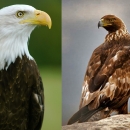
Final Eagle Rule Announced

Permit Program in Final Rule for Bald Eagles and Golden Eagles

Bald Eagle and fledgling

The U.S. Fish and Wildlife Service announced a final rule on two new permit regulations that would allow for the take of eagles and eagle nests under the Bald and Golden Eagle Protection Act (Eagle Act).

Bald Eagles were removed from the endangered species list in June 2007 because their populations recovered sufficiently. However, the protections under the Eagle Act continue to apply. When the Bald Eagle was delisted, the Service proposed regulations to create a permit program to authorize limited take of Bald Eagles and Golden Eagles where take is associated with otherwise lawful activities.

Final Rule
More Information


Horizontal Line

City of Philadelphia Receives Grant for Urban Conservation Treaty for Migratory Birds

On August 13th at “Zoo Night” during American Ornithologists Union’s annual meeting, the U.S. Fish and Wildlife Service (Service) announced $70,000 in grant funding as part of the USFWS Urban Treaty Grant Announcement to Philadelphia Urban Conservation Treaty for Migratory Birds to the City of Philadelphia. The Treaty, a partnership between the Service, the City of Philadelphia, and Fairmount Park is a commitment to restore, conserve and protect valuable bird habitat within Philadelphia’s urban environment and to develop an informed public through education and training programs.

Press Release
More Information


Horizontal Line

Birds of Conservation Concern

Rufous HummingbirdThe Division of Migratory Bird Management announces the availability of Birds of Conservation Concern 2008.This publication identifies species, subspecies, and populations of migratory and nonmigratory birds in need of additional conservation actions. We hope to stimulate coordinated and collaborative proactive conservation actions among Federal, State, tribal, and private partners. The species that appear in Birds of Conservation Concern 2008 are deemed to be the highest priority for conservation actions. We anticipate that the document will be consulted by Federal agencies and their partners prior to undertaking cooperative research, monitoring, and management actions that might directly or indirectly affect migratory birds. The Notice of Availability.


Horizontal Line

Vertical Line

Birds Of Conservation Concern

Hummingbird

Migratory Bird Partnership Agreements

MOU Signing

Migratory Bird Strategic Plan

Migratory Bird Strategic Plan Cover

Focal Species

Godwit Credit: Kathy Fleming,  USFWS
Godwit Credit: Kathy Fleming, USFWS

Resident Canada Goose
Nest Egg Registration

Canada Goose in Nest

Migratory Bird Flyways

Flyway Map


DMBM Logo

Last updated: August 17, 2010