


Bandon Marsh
Bandon, OR 97411-8397
Plan Your Visit
Bandon Marsh National Wildlife Refuge is open seven days a week, sunrise to sunset. The winters are rainy and the summers are dry, but the temperate climate allows visitors to enjoy the outdoors year round. Refuge nature trails are open daily from sunrise to sunset. There are three refuge access points: Bandon Marsh Overlook at Riverside Drive, and the Ni-les'tun Marsh Viewing Platform and South Coast Office on North Bank Lane.
Directions:
- To Bandon Marsh: From US Highway 101 just north of Bandon, turn west onto Riverside Drive and park in the refuge parking lot on the west side of the road.
- To Ni-les'tun Marsh: From US Highway 101 just north of Bandon, turn onto North Bank Lane and drive about a mile to the overlook parking lot on the south side of the road.
Activities


Get Involved
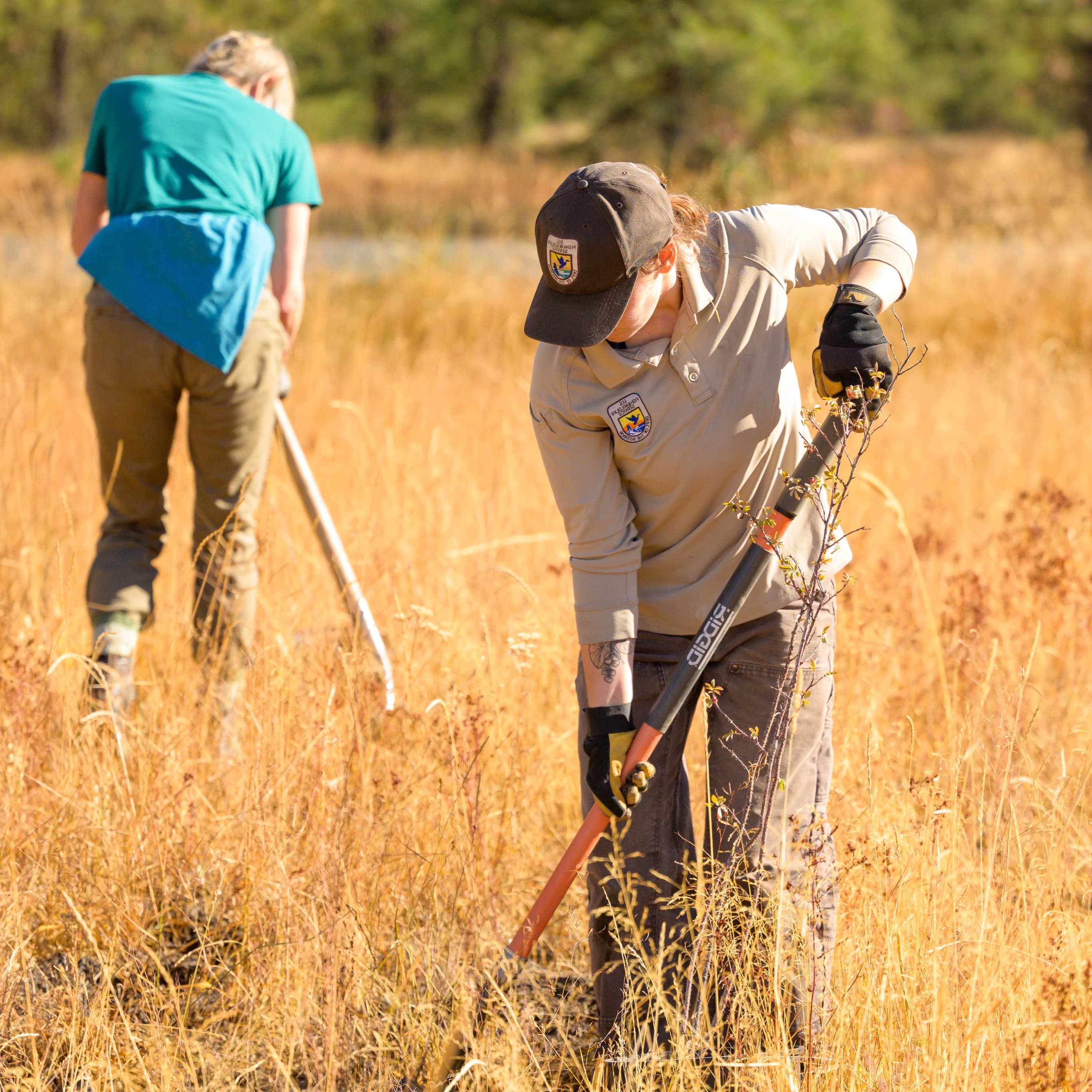
Whether you want to further conservation, learn more about nature or share your love of the outdoors, you’ve come to the right place. National Wildlife Refuges provide many opportunities for you to help your community and fish and wildlife by doing what you love.
Discover for yourself what tens of thousands of volunteers have learned: Volunteering for the U.S. Fish and Wildlife Service is fun and rewarding in many ways. Master new skills. Meet new friends. Enjoy a sense of accomplishment from doing your part to further wildlife conservation for the pleasure of generations to follow.
Contact the Oregon Coast National Wildlife Refuge Complex at oregoncoast@fws.gov to learn about our current volunteer opportunities. We may have opportunities for local community members as well as those travelling to the refuge from out of town, contact us to see if we have a place for you!
Working with others to conserve, protect, and enhance fish, wildlife, plants, and their habitats for the continuing benefit of the American people.
Services
The U.S. Fish and Wildlife Service conserves and monitors plants and animals, manages and restores habitat, and provides outdoor recreation for the public at the nation’s more than 550 National Wildlife Refuges.
The coastal Refuges offer unique opportunities to study plants and animals in pristine or relatively undisturbed habitats. These field studies seek to answer questions ranging from the needs of a single species to how an entire ecosystem functions.
Management and Conservation
Refuges deploy a host of scientifically sound management tools to address biological challenges. These tools span active water management to wilderness character monitoring, all aimed at ensuring a balanced conservation approach to benefit both wildlife and people.
Comprehensive Conservation Plan
In accordance with the National Wildlife Refuge System Administration Act and the Wilderness Act, a Comprehensive Conservation Plan (CCP) was finalized for Bandon Marsh National Wildlife Refuge by the U.S. Fish and Wildlife Service's Oregon Coast National Wildlife Refuge Complex in 2013.
The purpose of the CCP is to map a vision of the refuges' future desired conditions, addressing issues of land protection, public use, types of habitat to be provided, partnership opportunities, and the management actions needed to achieve this vision. This CCP specifies a management direction for the Refuge for 15 years.
Bandon Marsh Refuge is in the process of developing an Inventory and Monitoring Plan to monitor Refuge resources, as well as developing a plan for management of invasive species .
Our Projects and Research
Biological Investigations
Many land management objectives occur at scales that can be challenging to grasp from ground level. A good aerial photograph is worth thousands of words when conveying the big picture perspective of how all the pieces of a landscape fit together.
The coastal refuges offer unique opportunities to study plants and animals in pristine or relatively undisturbed habitats. These field studies seek to answer questions ranging from the needs of a single species to how an entire ecosystem functions.
Biologists conduct innovative research in many coastal habitats, including marshes and estuaries. At Bandon Marsh Refuge, the removal of dikes brought back the influence of daily tidal cycles and restored the natural hydrology of the marsh, providing ample opportunity for research.
Invasive plant monitoring, control and eradication at Bandon Marsh National Wildlife Refuge
Invasive plants are one of the most frequently cited threats to biological integrity, diversity, and environmental health within the National Wildlife Refuge System because of their negative impact on habitat structure, species composition, and overall function of ecological communities. The refuge collaborates with partners on the eradication of Gorse and other high priority noxious weeds. Annual inventories and the application of control methods to eradicate noxious weeds are a high priority activity at Bandon Marsh Refuge.
Annually, refuge staff map the location of known invasive plants. Based on a set of prioritized weeds, control methods are applied. In addition to mapping, monitoring and controlling existing weed species, the refuge staff also conduct surveys in all refuge habitat types to identify new pioneer species of concern. This method enables early detection of highly concerning species so that a rapid response for eradication can be applied.
Mosquito Management at Ni-les'tun Marsh (2026 Update)
History & Early Management
Restoring the Ni-les’tun Marsh from a dairy farm into a tidal wetland in 2010–2011 inadvertently created small water-retaining pools, sparking a massive salt marsh mosquito (Aedes dorsalis) outbreak from 2013 to 2015. To combat this health hazard, the refuge launched an abatement program in 2014. Partnering with Vector Disease Control International (VDCI), they treated pools with Bti larvicide, dredged new drainage channels, and trapped adult mosquitoes. By 2016, VDCI successfully resolved the issue.
Current Conditions
A comprehensive 2020 post-restoration assessment by VDCI confirmed that mosquito production conditions remain strictly limited. While 2020 adult trapping numbers were slightly higher, larval surveys remained low and consistent with 2016 levels—indicating that most adult mosquitoes originated off-refuge. Today, refuge staff continue routine monthly summer monitoring to maintain a healthy, balanced tidal wetland ecosystem.
About
Established in 1983 along the breathtaking southern Oregon coast near the mouth of the Coquille River and the historic city of Bandon, Bandon Marsh National Wildlife Refuge spans a vibrant and vital coastal landscape. Its rich, invertebrate-dense mudflats act as a crucial ecological fueling station, supporting the arduous migrations of tens of thousands of shorebirds each spring and fall along the Pacific Flyway. Beneath the surface, the estuary's intricate network of steep-banked tidal channels and anchored driftwood offers a safe, nutrient-rich sanctuary for juvenile salmon and trout.
Spanning a diverse mosaic of freshwater and intertidal marshes, forested wetlands, lush grasslands, and upland forests, the refuge preserves a rich continuum of Pacific Northwest habitats. These protected lands and waters continue to support a thriving web of native wildlife and offer an enduring sanctuary for the natural heritage of the Oregon coast.
Bandon Marsh National Wildlife Refuge protects the largest remaining tidal salt marsh within the Coquille River estuary. Located near the mouth of the Coquille River, it is an oasis for migrating shorebirds, waterfowl, and threatened and endangered species such as Coho Salmon and Western Snowy Plover.
Our History
Established in 1983 and expanded several times since, Bandon Marsh Refuge now encompasses 889 acres and is composed of two major marsh areas: Bandon Marsh and Ni-les’tun Marsh. Habitat restoration projects on the Ni-les’tun Marsh were completed in 2014 and benefit fish and wildlife species and protect cultural resources from development. In addition to providing habitat for wildlife, tidal marshes sequester atmospheric carbon in plant tissues and buffer coastlines against storm surges.
Bandon Marsh, the first area designated as part of this refuge,protects a large tract of salt marsh within the Coquille River estuary, second in size only to the Ni-les'tun Marsh. Major habitats include undisturbed salt marsh, mudflat, and Sitka Spruce/Red Alder riverbank communities. These provide resting and feeding areas for migratory waterfowl, shorebirds, wading birds, neotropical migrants, and raptors.
The lower Coquille River estuary provides important habitat for juvenile and adult forms of anadromous fish species, including Coho and Chinook salmon, steelhead, and Cutthroat Trout.
The Ni-les'tun Marsh of Bandon Marsh Refuge was named by the Coquille Indian Tribe. Ni-les'tun means "small fish dam in the river", referring to the numerous fish weirs located on and adjacent to the site, which were used by ancestral Coquille for capturing salmon and other estuarine species.
Most of the land in the Ni-les'tun Marsh was formerly diked lowland pasture. In 2011, thanks to efforts by Refuge staff and their partners, dikes were lowered and tide gates were removed to restore over 400 acres of tide marsh, making it the largest tide marsh restoration project in Oregon. Other habitats of the Ni-les'tun Marsh include intertidal marsh, forested wetlands, grasslands, and upland forest.
Since the restoration of Ni-les'tun Marsh, the refuge has focused on studying the impacts and progression of the restoration through time and developing other areas of the refuge to benefit wildlife and the public.
Other Facilities in this Complex
Bandon Marsh National Wildlife Refuge is managed as one of six Refuges in the Oregon Coast National Wildlife Refuge Complex.
Refuge Headquarters:
Oregon Coast National Wildlife Refuge Complex
2127 SE Marine Science Drive
Newport, OR 97365
541-867-4550
oregoncoast@fws.gov
What is a Refuge Complex?
A National Wildlife Refuge Complex is a group of two or more refuges, wildlife management areas or other refuge conservation areas that are managed from one central office. Refuges are grouped into a complex because they occur in a similar ecological region, such as a watershed or specific habitat type, and have a related purpose and management needs.
The Oregon Coast National Wildlife Refuge Complex is managed from our headquarters in Newport, Oregon. The office located at Bandon Marsh Refuge serves as a south-coast field office.
