Features

Birds of the Rainwater Basin
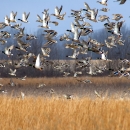
Pintail ducks are just one of the bird species you can see at Rainwater Basin. Click on the link for full list.
RWB Bird list 2011
Spoonbill Flats WPA
Spoonbill Flats was chosen for the name of our newest WPA. The name was submitted by Andrew N. Thank you everyone for your name suggestions.

We're now on Facebook!
Rainwater Basin Wetland Management District is now on Facebook. So please like us today!
Rainwater Basin WMD Facebook page

Current Restoration Work
In order to provide suitable habitat for waterfowl in the Rainwater Basin, occasional heavy restoration work must be completed.
Restoration Work
District's Vision

The Rainwater Basin provides critical habitat for millions of migratory birds. The basin’s name reflects both the basis of its wetland hydrology and natural precipitation cycles. A network of functioning wetland and prairie plant ecosystems provides a native grassland mosaic that gives the local community a sense of pride and connection to the Great Plains flora and fauna. The lands managed by the wetland management district serve as an example of land stewardship mimicking natural processes, and they provide an array of wildlife-dependent educational and recreational opportunities. It is only through partnerships with individuals, agencies, and organizations that this vision can be achieved and maintained.
Endangered Species

The Rainwater Basin Wetland Management District plays a vital role in the restoration and preservation of essential migration habitat that supports approximately 300 remaining wild Whooping Cranes during their spring and fall migrations.
Whooping Crane Profile
About the NWRS
The National Wildlife Refuge System, within the U.S. Fish and Wildlife Service, manages a national network of lands and waters set aside to conserve America’s fish, wildlife, and plants.
Learn more about the NWRS
Items of Interest
Spoonbill Flats Waterfowl Production Area (WPA) was the chosen name for Rainwater Basin WMDs newest WPA. The name was submitted by Andrew N. of Springfield, NE. Andrew is a freshman at the University of Nebraska-Lincoln and hunted in the area growing up.
Rainwater Basin Wetland Management District Office is open Monday - Friday from 8AM to 4:30PM except for Federal Holidays.
Waterfowl Production Areas are open sunrise to sunset.

US Fish and Wildlife Service's Private Lands Program can provide a common sense approach to habitat management, provide support for wildlife, agriculture and rural lifestyles through financial and technical assistance.
Partners for Fish and Wildlife

Fire Management
Prescribed burning is used to remove old vegetative growth, release nutrients back to the soil, decrease woody and other invasive and undesirable plant species, increase warm season grasses and forbs, and reduce the amount of organic matter (litter) on the soil surface.
Page Photo Credits All photos courtesy of USFWS unless otherwise noted., © Doug Steinke - Main Banner - Pintails and Mallards (Used with permission.)
Last Updated: May 31, 2013