


Bear River
Brigham City, UT 84302
Plan Your Visit
Bear River Migratory Bird Refuge lies in Northern Utah, where the Bear River flows into the Northeast arm of the Great Salt Lake. On the ancestral homelands of the Shoshone, Paiute, Bannock, and Ute people, known as the Newe or Meme (the People), the Refuge protects the marshes found at the mouth of the Bear River. Surrounded by arid desert lands, these marshes are the largest freshwater component of the Great Salt Lake ecosystem and are an oasis for waterbirds and wildlife.
Activities
Bear River Migratory Bird Refuge, located in Brigham City, Utah, offers a variety of outdoor recreation opportunities. On the 12-mile Auto Tour Route, view a great diversity of birds without ever leaving your vehicle. Listen to the self-guided Audio Tour along the way to learn more about what you are seeing! Want to stretch your legs? Walk the 1.5 miles of trails around the Visitor Center located just 1/4 mile from Interstate-15, exit 363.
The Visitor Center is open Tuesday through Saturday, 10:00 a.m. to 4:00 p.m. The Auto Tour Route, Wetland Wonders, Bulrush Bridge, and Marsh Meander trails continue to be open sunrise to sunset Monday through Sunday.
Enjoy photography, wildlife watching, birding, hiking, cycling, running, hunting, fishing, and painting on the Refuge. Check the website often for special events and environmental education opportunities.
Brochures & Information
Bear River Migratory Bird Refuge General Brochure
Bear River Migratory Bird Refuge Hunting Brochure
Bear River Migratory Bird Refuge Fishing Brochure
Bear River Migratory Bird Refuge Spanish Fishing Brochure
Walking Trails Map for Visitors at Bear River Migratory Bird Refuge
Visiting the Refuge is FREE! Military Lifetime, Access, and Every Kid Outdoors Fourth Grade America the Beautiful Passes can be acquired at the Visitor Center.
From Interstate-15 Driving North
- Take Exit 363.
- Turn West on Forest Street.
- Drive about 1/4 miles and take a left into the Visitor Center's Parking Lot.
- The Auto Tour Route can be accessed by driving past the Visitor Center along Forest Street for 12 miles.
Activities


More Activities
Featured Species


Get Involved
Whether you want to further conservation, learn more about nature, or share your love of the outdoors, you have come to the right place. National Wildlife Refuge's provide many opportunities for you to help your community as well as fish and wildlife by doing what you love. National Wildlife Refuge's partner with volunteers, youth groups, landowners, neighbors, and residents to make a lasting difference. Find out how you can help make American lands healthier and communities stronger while doing something personally satisfying.
Volunteers: Gain new experiences and meet new people while helping to advance wildlife conservation.
Friends: Join neighbors in helping Refuge's restore habitat and expand access to green space.
Landowners: Learn how you can partner with the the U.S. Fish and Wildlife Service to voluntarily restore land.
Local Groups: Find out how communities can work with Refuge's better for wildlife and people.
Youth: Explore paid and unpaid opportunities to learn and develop leadership skills.
Similar to how the bird species vary on the Refuge, so do the opportunities to get involved. You can volunteer, work as a partner, or join the Friends of the Bear River Refuge.
Volunteering: Discover for yourself what tens of thousands of volunteers have learned - volunteering for the U.S. Fish and Wildlife Service is fun and rewarding in many ways. Master new skills. Meet new friends. Enjoy a sense of accomplishment from doing your part to further wildlife conservation for the pleasure of generations to follow. Check out the station's latest volunteer opportunities on volunteer.gov.
Volunteering is one excellent and important way you can get involved with Bear River Migratory Bird Refuge. It is a great way to get outside, get involved with wildlife conservation, and learn about birds and their habitats.
Youth Volunteering and Internships: Open the door to a potentially life-changing experience. If you land a student internship, fellowship, or volunteer opportunity at a National Wildlife Refuge, fish hatchery, or other U.S. Fish and Wildlife Service site, you are bound to come away with new insights and excitement about conservation. The Refuge works with various partners such as American Conservation Experience and Environment for the Americas for many internship opportunities. Current interns serve as visitor services and biological specialists.
Partners: Nature does not recognize human-made boundaries. In order to conserve natural and cultural resources effectively, working with others to bridge these boundaries is essential. Partnerships foster creative solutions to challenging situations and often the results are greater than the sum of the parts.
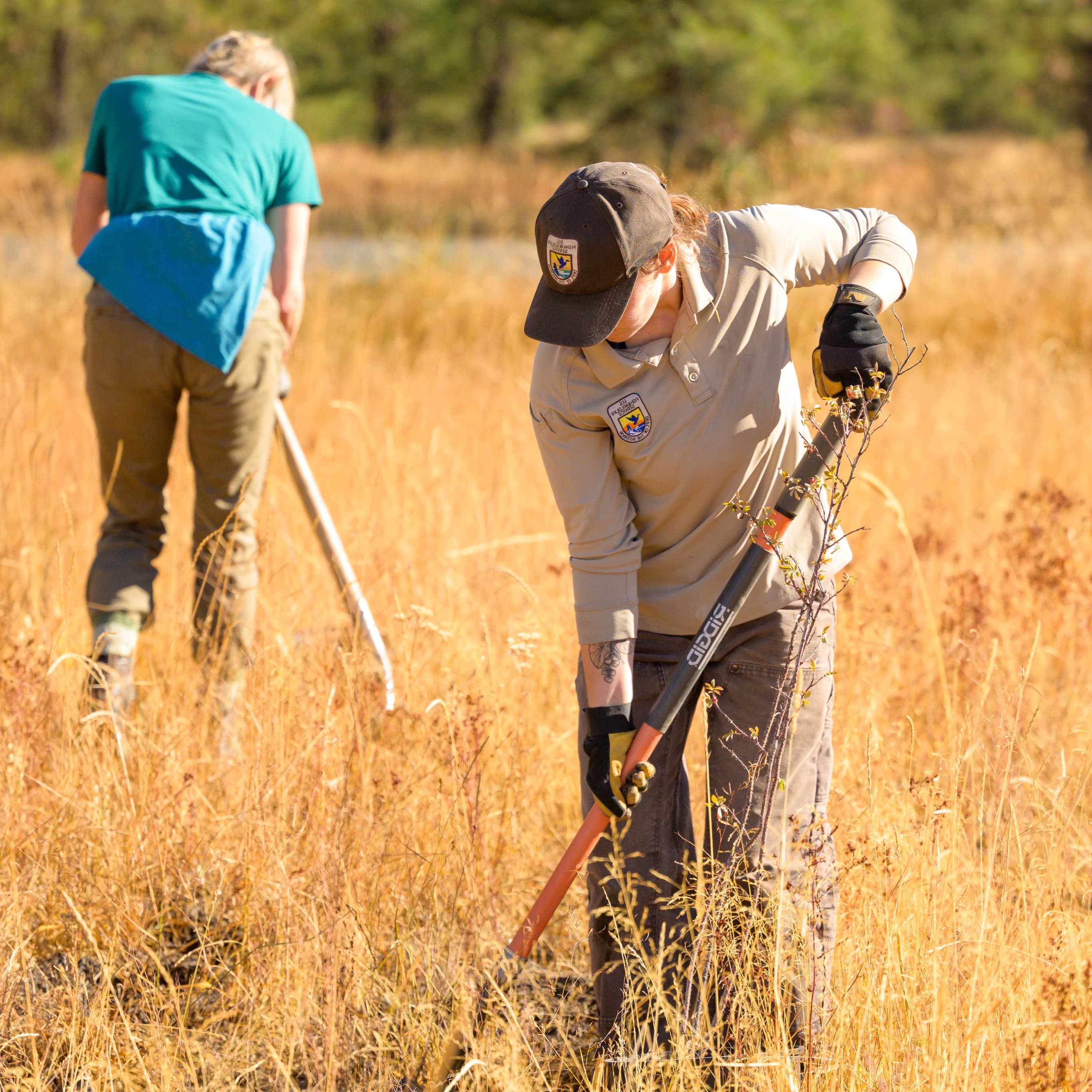
Working with others to conserve, protect, and enhance fish, wildlife, plants, and their habitats for the continuing benefit of the American people.
Services
Wildlife conservation is at the heart of the National Wildlife Refuge System. It drives everything on U.S. Fish and Wildlife Service lands and waters managed within the Refuge System, from the purposes for which a National Wildlife Refuge is established to the recreational activities offered to the resource management tools used. Using conservation best practices, the Refuge System manages Service lands and waters to help ensure the survival of native wildlife species.
Refuge staff use a variety of habitat management techniques to maintain, recover, or enhance plant and wildlife values. Management techniques are carefully considered and employed in varying degrees according to needs.
Water levels are carefully monitored and controlled to foster desired plant growth. Sometimes, sensitive areas are closed to the public so that the land can recover more quickly. Predator control is conducted on the Refuge to protect nesting birds and enhance their nesting success. Prescribed burning, mowing, and seeding are also some techniques used to help native plants recover on the Refuge.
Standardized ground and aerial wildlife and vegetation surveys are conducted on Refuges throughout the year to inventory populations and document habitat use. Units are evaluated by how well they met habitat and wildlife use objectives.
Bear River Migratory Bird Refuge staff set habitat objectives by linking ecological and physical aspects of Refuge lands with priority species requirements. Objectives concisely state habitat conditions needed for priority species. Finally, Refuge staff use ecological data, scientific literature, expert opinion, key historical Refuge data, and staff expertise to generate a list of potential management strategies for each habitat type. The most appropriate management strategy is selected each year during the annual habitat management process. The strategy selection is based on the effect of management on habitat and species of concern from the previous year, as captured through monitoring, as well as on the predicted water supply of the Bear River for the coming year.
Management and Conservation
Refuge's deploy a host of scientifically sound management tools to address biological challenges. These tools span active water management to wilderness character monitoring, all aimed at ensuring a balanced conservation approach to benefit both wildlife and people. Bear River Migratory Bird Refuge is one of hundreds of Refuges that use non-recreational trapping as a management tool. Bear River Migratory Bird Refuge conservation toolbox also includes:
- Planning
- Habitat Restoration
- Agriculture
- Climate Resilience
- Conservation Easements
- Compatibility Determinations
- Contaminants Mitigation
- Education and Outreach
- Fire Management
- Grazing
- Human Dimensions
- Invasive Species Management
- Inventory and Monitoring
- Land Acquisition
- Law Enforcement
- Recreation Management
- Species Research
- Trapping (non-recreational)
- Water Management
About
The Refuge lies along the Eastern edge of the Pacific Flyway and the Western edge of the Central Flyway, making it an important resting, feeding, and nesting area for birds in both flyways. Of the more than 250 bird species that use the Refuge, 67 species nest on the Refuge. American avocets and black-necked stilts nest by the thousands along Refuge dikes and roads. White-faced ibis nest in dense emergent vegetation in large colonies of up to 10,000 birds. Migrant tundra swans can number in the tens of thousands in the spring and fall. The Refuge uses a complex system of dikes and water control structures to provide different water depths for a variety of waterbird species over the seasons.
