Wapanocca NWR | Southeast Region
US Fish and Wildlife Logo National Wildlife Refuge logo Wapanocca NWR header
Blue rule lines graphic

Wapanocca National Wildlife Refuge

Central Arkansas Refuges

Keith Weaver
Project Leader
Jonathan Windley
Deputy Project Leader
26320 Highway 33 South
Augusta, AR 72006
(870) 347-2614
FAX: (870) 347-2908
Jason Wilson
Refuge Manager, Wapanocca
PO Box 279
Highway 42 East
Turrell, AR 72384
870-343-2595
Fax: 870-343-2416

paw imprint graphic   Directions to Refuge & Map

paw imprint graphic   General Brochure

paw imprint graphic   Hunting/Fishing Regulations

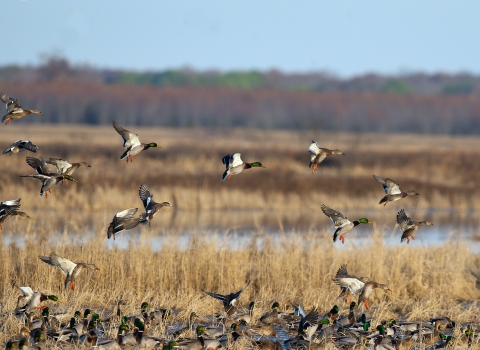
Ducks in lake

Brad Carner bags a nice 10 point deer

Cottonmouth

Great fishing trip!

Quota Hunt Instructions

Refuge Facts:

  • Established: 1961.
  • Acres: 5,484. Much of it acquired from the former Wapanocca Outing Club one of the oldest and most prestigious hunting clubs.
  • Located in Crittenden County AR, 3 miles from the Mississippi River. Adjacent to the city of Turrell.
  • Other management: two fee title tracts in St. Francis County totaling 509 acres.
  • Location: from the north: exit I-55 at exit number 23 onto Highway 77 south, 2 miles to Highway 42 east 1/8 mile. From the south: exit I-55 at exit number 21 onto Highway 42 east 1.5 miles.

Natural History:

  • Refuge lies in the Mississippi Delta protected from the river by the river levee.
  • Refuge was once a bend in the Mississippi River.
  • Concentrations of wintering and migrating ducks, geese, and raptors.
  • Major migration stopover of warblers and other neo-tropical migrants.
  • Large great blue heron, common egret, anhinga rookery.
  • Active bald eagle nest.
  • Open water 600 acres; swamp 1,800 acres; upland hardwoods 900 acres; bottomland hardwoods 650 acres; croplands 450 acres; grasslands 400 acres.

Financial Impact of Refuge

  • Two-person staff.
  • 16,000 visitors annually.
  • Current budget (FY 05) $323,000.

Refuge Objectives

  • Provide habitat for wintering migratory waterfowl and other birds.
  • Provide habitat for nesting wood ducks.
  • Provide environmental education and interpretation opportunities to the public.
  • Provide recreational (hunting, fishing, wildlife observation & photography) opportunities for the public.

Management Tools:

  • Water management for waterfowl, marsh and water birds and shorebirds.
  • Forest management for neotropical birds.
  • Cooperative farming.
  • Mechanical/chemical control of undesirable plants.
  • Education/interpretation.
  • Law enforcement.
  • Partnerships.
  • Fishery management by water level manipulation.
  • Commercial fishing for rough fish.
  • Trapping to reduce problem beavers.

Public Use Opportunities

  • Nature drive.
  • Visitor contact station.
  • Observation platform.
  • Wildlife observation.
  • Fishing.
  • Hunting.
  • Photography.
  • Canoeing.

Calender of Events

March: raccoon hunting.

March-September: fishing.

May: peak warbler migration, Migratory Bird Day.

June: National Fishing Week.

October: National Wildlife Week.

October-November: squirrel/rabbit hunting.

October - December: deer hunting (archery/quota gun)

November: raccoon hunting.


Questions and Answers

When does the lake open?

The lake opens to the public March 15 and closes September 30.
Do you allow camping?
No. There is a campground, "Best Holiday Trav-L-Park," along I-55 at James Mill.
Do you allow hunting?
Yes. Squirrel/rabbits -- October 1-November 30. Raccoon -- November 1-30 and March 1-31. Deer -- October - November.
How is fishing?
Wapanocca Lake has re-opened to fishing after restoration efforts. Please call Jason Wilson at 870-343-2595 for additional information.
What is being done to restore the lake?

Long Term: The lake was drained in 2004 - 2005 to solidify the lake bottom. In 2005, 900 tons of pea gravel was placed in various locations in the lake bed to create additional spawning beds. Numerous holes were dug in the lake bed using an excavator to provide additional habitat for fish. Sport fish fingerlings will be stocked in the lake in late winter of 2006. Once the fish are big and old enough to spawn, the lake will once again be opened for fishing.

Short Term: Refuge officials are working with the U.S. Army Corp of Engineers to find an alternative water supply to bring in fresh water periodically. This would keep the lake and fisheries in a healthy condition.

Discover American's Best Kept Secret National Wildlife Refuge banner

FWS Southeast Region Home | Privacy Information | Contact Us