


While wildlife comes first on all National Wildlife Refuges, we can also provide outdoor recreation, wildlife watching, and photography opportunities to our visitors—like the nature trails, observation towers and decks, and the Wildlife Drive here at Montezuma. The Wildlife Drive and Visitor Center are open annually from April 1 (weather-permitting) through November 30. Walking trails and observation areas are open year-round, with some trail closure during the white-tailed deer hunting season. Refuge visiting hours are sunrise to sunset; office hours are weekdays from 8:00 am to 4:00 pm; Visitor Center hours are daily, 10:00 am to 3 pm, April 1 - November 30.
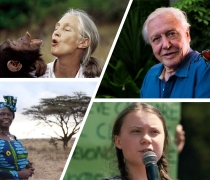
A conservationist is someone who advocates for the protection and preservation of the environment, wildlife, natural resources, and ecosystems. They work to ensure that natural habitats are maintained, endangered species are protected, and sustainable practices are implemented to minimize environmental degradation. Conservationists often engage in research, advocacy, education, land management, and policy-making to promote responsible stewardship of the planet's resources for current and future generations.
Take the quiz below to see which famous conservationist you most resemble!
1. What motivates you to protect the environment?
a) Love for nature and wildlife
b) Concern for future generations
c) Desire to preserve natural beauty
d) Belief in sustainable living
2. How do you prefer to spend your free time?
a) Exploring national parks and wildlife reserves
b) Participating in environmental activism
c) Gardening or tending to plants
d) Learning about renewable energy solutions
3. Which issue concerns you the most?
a) Deforestation and habitat loss
b) Pollution and climate change climate change
Climate change includes both global warming driven by human-induced emissions of greenhouse gases and the resulting large-scale shifts in weather patterns. Though there have been previous periods of climatic change, since the mid-20th century humans have had an unprecedented impact on Earth's climate system and caused change on a global scale.
Learn more about climate change
c) Endangered species protection
d) Water conservation and clean ocean
4. What's your approach to influencing others to care about conservation?
a) Lead by example and inspire through actions
b) Advocate for policy changes and raise awareness
c) Educate about the importance of biodiversity
d) Promote eco-friendly practices in daily life
5. How do you feel about technology's role in conservation efforts?
a) Embrace technology for wildlife tracking and monitoring
b) Use technology to address environmental challenges
c) Balance traditional conservation methods with technology
d) Explore innovative solutions for sustainable living
6. What's your favorite habitat or ecosystem?
a) Rainforests and tropical environments
b) Arctic regions and polar ecosystems
c) Coral reefs and marine environments
d) Grasslands and savannas
7. Which quote resonates with you the most?
a) "The Earth does not belong to us: we belong to the Earth." - Marlee Matlin
b) "We do not inherit the earth from our ancestors, we borrow it from our children." - Native
American Proverb
c) "In nature, nothing exists alone." - Rachel Carson
d) "The only way forward, if we are going to improve the quality of the environment, is to get
everybody involved." - Richard Rogers
Now, tally up your answers based on the letters you chose for each question:
Mostly A's: You are like Jane Goodall, passionate about wildlife conservation and exploring the natural world.
Equipped with little more than a notebook, binoculars, and her fascination with wildlife, Jane Goodall braved a realm of unknowns to give the world a remarkable window into humankind’s closest living relatives. Through nearly 60 years of groundbreaking work, Dr. Jane Goodall has not only shown us the urgent need to protect chimpanzees from extinction; she has also redefined species conservation to include the needs of local people and the environment. Today
she travels the world, speaking about the threats facing chimpanzees and environmental crises, urging each of us to take action on behalf of all living things and planet we share. (Source – https://janegoodall.org/our-story/about-jane/)
Mostly B's: You align with Greta Thunberg, focusing on climate activism and advocating for environmental policy changes.
Fridays for Future is a youth-led and -organized global climate strike movement that started in August 2018, when 15-year-old Greta Thunberg began a school strike for climate. In the three weeks leading up to the Swedish election, she sat outside Swedish Parliament every school day, demanding urgent action on the climate crisis. She was tired of society’s unwillingness to see the climate crisis for what it is: a crisis.
To begin with, she was alone, but she was soon joined by others. On the 8th of September, Greta and her fellow school strikers decided to continue their strike until the Swedish policies provided a safe pathway well under 2° C, i.e. in line with the Paris agreement. They created the hashtag #FridaysForFuture, and encouraged other young people all over the world to join them. This marked the beginning of the global school strike for climate.
Their call for action sparked an international awakening, with students and activists uniting around the globe to protest outside their local parliaments and city halls. Along with other groups across the world, Fridays for Future is part of a hopeful new wave of change, inspiring millions of people to take action on the climate crisis! (Source – https://fridaysforfuture.org/)
Mostly C's: Your conservationist spirit resembles that of David Attenborough, valuing biodiversity and the interconnectedness of ecosystems.
Sir David Frederick Attenborough is a British broadcaster, biologist, natural historian and author. He is best known for writing and presenting, in conjunction with the BBC Natural History Unit, the nine natural history documentary series forming the Life collection, a comprehensive survey of animal and plant life on Earth.
Attenborough was a senior manager at the BBC, having served as controller of BBC Two and director of programming for BBC Television in the 1960s and 1970s. First becoming prominent as host of Zoo Quest in 1954, his filmography as writer, presenter and narrator has spanned eight decades; it includes Natural World, Wildlife on One, the Planet Earth franchise, The Blue Planet and its sequel. He is the only person to have won BAFTA Awards in black and white, color, high-definition, 3D and 4K resolution. Over his life he has collected dozens of honorary degrees and awards, including three Emmy Awards for Outstanding Narration.
While Attenborough's earlier work focused primarily on the wonders of the natural world, his later work has been more vocal in support of environmental causes. He has advocated for restoring planetary biodiversity, limiting population growth, switching to renewable energy, mitigating climate change, reducing meat consumption, and setting aside more areas for natural preservation. (Source – https://en.wikipedia.org/wiki/David_Attenborough)
Mostly D's: You share similarities with Wangari Maathai, promoting sustainable living practices and innovative solutions for environmental challenges.
Wangari Maathai was born in rural Kenya, where she learned to value and respect trees and nature from her mother. At a time when most Kenyan women had no formal education, Maathai attended colleges in the United States, Germany, and Kenya, and became the first woman in East and Central Africa to receive a Ph.D.
While serving on the African Council of Women, she made the connection that many issues facing rural women, such as lack of firewood, food and clean water, was tied to the destruction of the environment. She introduced the idea of community-based tree planting, which she fostered and developed into the “Green Belt Movement”.
When politicians proposed privatizing Uhuru Park in Nairobi for development, Maathai’s environmental advocacy thrust her into the democracy movement. She was publicly attacked for her non-traditional views of women and was jailed and beaten during some of her pro-democracy demonstrations. Maathai entered into politics in order to improve democracy in Kenya, serving in the parliament and as Kenya’s Assistant Minister for Environment and Natural Resources.
In 2004, Professor Maathai was internationally acknowledged for her struggle for democracy, human rights, and environmental conservation, winning the Nobel Peace Prize. Her message that people have the power to improve the environment, their economy, and bring peace resonates across cultures and remains relevant as the world addresses climate change, poverty, and regional conflicts. (Source – https://conservationhistory.org/conservation-heroes/)
Visit Us
National wildlife refuges offer us all a chance to unplug from the stresses of daily life and reconnect with our natural surroundings. Montezuma NWR, in the Finger Lakes region of New York State, is a globally renowned place for birding and nature photography. There are several ways to enjoy the refuge: view displays and get information from our volunteers at the visitor center; take the 3-mile Wildlife Drive auto tour route; walk nature trails of various lengths and difficulty; gain a different perspective from viewing towers and platforms; fish from the refuge into state-owned waters; hunt various species during New York State hunting seasons. You can also follow the cell phone tour provided by the Friends of the Montezuma Wetlands Complex: https://mwc.oncell.com/en/tour-of-the-montezuma-wetlands-complex-153838.html
Hours
Walking trails and viewing areas are open year-round, sunrise to sunset. Expect some trail closures during the New York State white-tailed deer hunting seasons. Please note that the Seneca Trail, accessible from the Visitor Center parking area, is partially closed until further notice; we are monitoring sensitive wildlife using the area around the trail.
Wildlife Drive is open April 1 - November 30, sunrise to sunset, weather-depending.
Visitor Center is open April 1 - November 30, 10:00 am to 3:00 pm , weather-depending.
Location and Contact Information
About Us
Establishing the Montezuma National Wildlife Refuge in 1938 was the first step of many to restore the area back to its historic expanse of marshes—an area thriving with wildlife, once used by indigenous people for hunting and fishing. The marshes were drained as a result of dam and canal construction in the early 1900s, and area wildlife virtually went the way of the water—gone. But, with the help of the Civilian Conservation Corps, a series of constructed dikes began to hold water and wildlife returned.
Today, Montezuma NWR continues to work toward restoring the historic Montezuma marshes, grasslands, shrublands, and forests. As part of the Montezuma Wetlands Complex—a partnership between the USFWS, the New York State Department of Environmental Conservation, Audubon NY, Ducks Unlimited, the Nature Conservancy, and Friends of the Montezuma Wetlands Complex—the Refuge acquires land through deed or easement and restores it to provide critical habitat to migratory birds and other wildlife.
Designated as an Audubon Important Bird Area, the refuge provides critical migration and nesting habitat for waterfowl, marsh birds, shorebirds, raptors, warblers, woodpeckers and more! Montezuma was the first site in New York State for a bald eagle restoration program in the mid- to late-1970s, reintroducing more than 20 bald eagles back into the wild. Today, the refuge boasts several active bald eagles nests and many people visit just to see our nation’s symbol in its natural habitat!
Tours
Guided tours may be available upon request, depending on staff availability. Please contact andrea_vanbeusichem@fws.gov to inquire about scheduling a guided tour.
What We Do
Wildlife conservation is at the heart of the National Wildlife Refuge System. It drives everything on U.S. Fish and Wildlife Service lands and waters managed within the Refuge System, from the purposes for which a national wildlife refuge national wildlife refuge
A national wildlife refuge is typically a contiguous area of land and water managed by the U.S. Fish and Wildlife Service for the conservation and, where appropriate, restoration of fish, wildlife and plant resources and their habitats for the benefit of present and future generations of Americans.
Learn more about national wildlife refuge is established to the recreational activities offered to the resource management tools used. Using conservation best practices, the Refuge System manages Service lands and waters to help ensure the survival of native wildlife species.
While a visit to Montezuma NWR can transport you deep into nature, it is important to know that much of the refuge is human-made and therefore continuously monitored and managed. Each refuge pool is created using heavy equipment to build dikes that hold water. Each pool also has a water control structure structure
Something temporarily or permanently constructed, built, or placed; and constructed of natural or manufactured parts including, but not limited to, a building, shed, cabin, porch, bridge, walkway, stair steps, sign, landing, platform, dock, rack, fence, telecommunication device, antennae, fish cleaning table, satellite dish/mount, or well head.
Learn more about structure to allow water to be drained as needed for optimum habitat. The Main Pool also has an inlet from Cayuga Lake, so can be filled using gravity-fed lake water. Other pools rely on water being pumped in or on rain to refill. A pool may be drained during spring and summer for one of two reasons: either to let plants regrow and refresh the marsh; or to create feeding habitat for migrating shorebirds.
Grassland and shrubland habitats undergo regular regimes of mowing/clearing in order to hold back natural succession to forest. We also used prescribed fire on some of our grasslands. Currently forest management includes monitoring trees that were planted several years ago, studying the impacts of white-tailed deer on certain forested areas, and monitoring for invasive species invasive species
An invasive species is any plant or animal that has spread or been introduced into a new area where they are, or could, cause harm to the environment, economy, or human, animal, or plant health. Their unwelcome presence can destroy ecosystems and cost millions of dollars.
Learn more about invasive species threats to certain species of trees.
Our Species
The Montezuma National Wildlife Refuge was established on September 12, 1938 as a refuge and breeding ground for migratory birds and other wildlife. Today, the refuge provides important habitat to over 300 species of birds. Of these, more than 100 species are known to nest on the refuge.
Projects and Research
Wetland Restoration/Montezuma Wetlands Complex Partnership
As an establishing member of the Montezuma Wetlands Complex (Complex) partnership, the Montezuma NWR focuses much of its resources on wetland restoration. The Complex partnership includes the Montezuma NWR, New York State Department of Environmental Conservation Northern Montezuma Wildlife Management Area, Friends of the Montezuma Wetlands Complex, Montezuma Audubon Center, Ducks Unlimited, and The Nature Conservancy. Complex partners work together to restore the historic Montezuma marshes—50,000 acres of wetlands that were drained in the early 1900s as a result of canal construction.
While the main purpose of the Complex partnership is to manage the area comprehensively (since the wildlife does not pay any mind to land ownership boarders!) to benefit marsh-dwelling wildlife, we also work together to provide opportunities for you to enjoy nature and get involved. Guided tours and educational programs offer in-person experiences to get to know not only the lands and waters, but also the staff. The Complex’s premiere volunteer program (MARSH! – the Montezuma Alliance for the Restoration of Species and Habitats!) allows you to work side-by-side with staff and other volunteers while you help restore habitats for native species. You also get to go “behind the scenes” of refuge management and enter into areas on the Complex where most visitors are not permitted!
Land Acquisition
Land acquisition has been part of Montezuma’s story since it was established. The refuge, in cooperation with the Montezuma Wetlands Complex, is actively purchasing land from willing sellers in an effort to restore the historic Montezuma marshes. Tax dollars are not used, but rather funds are primarily collected from the sale of Duck Stamps. While migratory bird hunters are required by law to purchase a Duck Stamp each year, we also encourage other refuge visitors to buy one to help support the land restoration efforts that result in other activities like birding and photography!
Water Level Management for Priority Species
The 10,000-acre Montezuma NWR is located in what was historically called the Montezuma Marshes. The water level within these marshes has been lowered by 10 feet for the construction and maintenance of the NY State Canal System, giving rise to the need to create and manage impoundments to provide historic habitat conditions.
We manage water levels within these impoundments to provide habitat for high conservation priority waterbird species including: migrating waterfowl, such as northern pintail; migrating shorebirds, such as greater and lesser yellowlegs; and a variety of nesting marsh birds, such as black terns, American and least bitterns, and pied-billed grebes. Species within these groups require different water levels and habitat conditions so impoundments are managed in a rotation to provide a variety of habitats at any given time.
When you visit the refuge, you are likely to see impounded areas that have been completely drained to mimic a drought and encourage plant growth, units with a lot of mudflats and shallow water for shorebirds, and wetlands with a mix of open water and vegetation for waterfowl and marsh birds.